

The global parcel volume crossing warehouses and distribution centers continues to climb, and 2026 is shaping up to be the year when high-throughput, space-efficient sorting finally becomes the default rather than the exception. Among the technologies leading this shift, the High-Speed Linear Narrow-Belt Sorting Machine stands out for its ability to combine compact footprints with remarkable accuracy. This article examines the 2026 market trends driving adoption, the engineering behind WINDA's linear narrow-belt solution, and the real-world application scenarios where it delivers the strongest return.
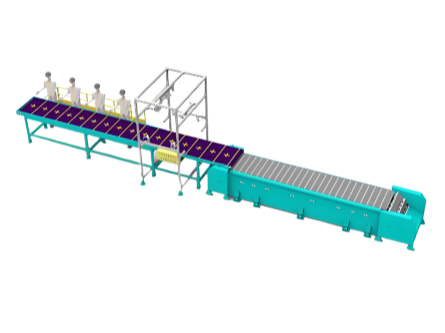
Three forces are converging in 2026 to push narrow-belt sorting into the mainstream. First, the sustained boom in e-commerce and cross-border small-parcel shipping has created a permanent need for systems that handle huge counts of small items without sacrificing precision. Second, warehouse operators are under pressure to do more with less floor space, making the compact linear layout of narrow-belt systems especially attractive. Third, the maturation of warehouse control software (WCS) and real-time analytics means these machines can now be fully integrated into smart, data-driven fulfillment operations.
Industry analysts note that sortation accuracy above 99.9 percent is no longer a differentiator but a baseline requirement. Systems that fall short force expensive manual re-sorts and erode customer trust. This is precisely where narrow-belt designs excel: by using narrow belt carriers arranged in a straight line, the machine can steer even very small parcels into the correct chute with minimal drift.
The High-Speed Linear Narrow-Belt Sorting Machine from WINDA is an advanced sorting solution engineered for high-throughput logistics and e-commerce operations. It utilizes narrow belt carriers arranged in a linear configuration to achieve precise and efficient sorting of parcels. The system is particularly effective for sorting small to medium-sized parcels with high accuracy and minimal damage rates. Its compact, linear design makes it ideal for warehouses with limited floor space.
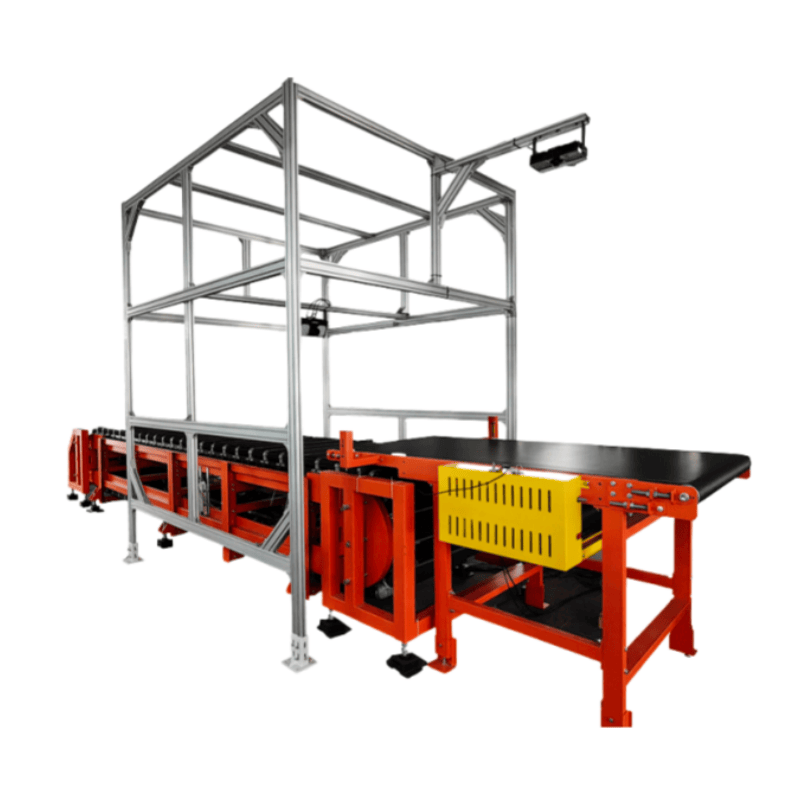
| Sorting Capacity | 10,000 - 15,000 parcels / hour (system capability up to 18,000 pcs/h) |
| Belt Speed | 1.5 - 2.5 m/s (adjustable) |
| Parcel Size Range | Min: 50 x 50 x 10 mm / Max: 400 x 600 x 300 mm |
| Parcel Weight | 0.03 - 15 kg |
| Sorting Accuracy | > 99.95% |
| Number of Chutes | Customizable (30 - 200 chutes) |
| Power Supply | 380V / 50Hz (customizable) |
| Control System | PLC + WCS (Windows / Linux) |

The flexibility of the linear narrow-belt architecture means it serves a wide span of industries:
Looking across the sorting equipment landscape in 2026, several clear trends emerge. The first is densification: as land and construction costs rise, buyers increasingly favor linear, narrow-footprint systems over sprawling loop sorters. The second is software-defined sorting: routing logic, chute assignment, and performance reporting are migrating into WCS layers, turning the physical sorter into a configurable node rather than a fixed appliance. The third is resilience through modularity: operators want machines whose belts and modules can be swapped quickly to avoid catastrophic line stoppages.
Sustainability is also entering the buying conversation. Energy-efficient belt drives, regenerative braking on deceleration zones, and longer-life modular components reduce both operating cost and environmental footprint. WINDA's design philosophy - compact footprint, gentle handling, and remote diagnostics - aligns directly with these 2026 priorities.
Finally, the labor market continues to reward automation. Systems that reduce dependence on manual sort lines while improving accuracy are now treated as strategic infrastructure rather than discretionary capital. For mid-size 3PLs and brand-owner fulfillment centers, a linear narrow-belt sorter has become one of the fastest payback investments available.
Because the platform is fully customizable, the optimal configuration depends on parcel mix, peak hourly volume, and available floor plan. Variables include the number of chutes (30-200), belt width, sorting logic, and the depth of integration with existing WMS/WCS systems. WINDA's standard lead time is 8-12 weeks, with expedited production available for urgent projects.
The High-Speed Linear Narrow-Belt Sorting Machine represents exactly the kind of pragmatic, high-accuracy automation that 2026 supply chains demand. By pairing a compact linear architecture with smart control and gentle handling, it solves the small-parcel sorting problem that continues to challenge e-commerce, pharmaceutical, food, and apparel operations alike. As densification, software-defined routing, and resilience become the defining themes of the year, narrow-belt sorting is well positioned to move from specialist choice to industry standard.
Ready to upgrade your sorting system? Our experts can design the perfect solution for your operation. Contact us for a free consultation:
Sorter
Wechat QR code
wechat number:Copyright © 2022-2023 Winda, inc. All rights reserved