

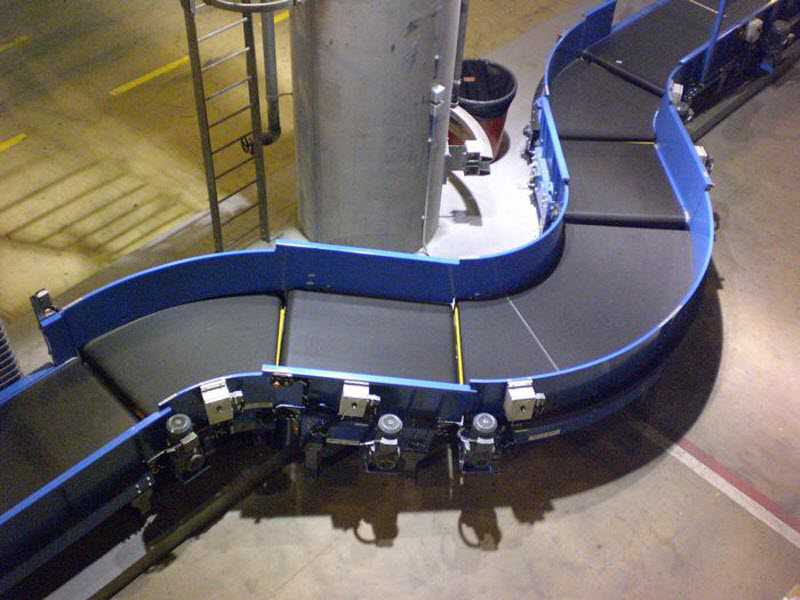
As e-commerce parcel volumes climb and fulfillment footprints grow compact, the belt turning machine has become a strategic component in modern material handling. In 2026, this steering conveyor - redirecting cartons, parcels, and totes at 30, 45, 90, and 180 degrees - rides a wave of automation investment driven by labor shortages, tighter warehouse real estate, and software-orchestrated sortation.
A belt turning machine (also called a belt curve conveyor or corner turning conveyor) is the connective tissue of any automated line. It smoothly redirects goods at fixed or custom angles so straight conveyors, roller sections, and high-speed sorters can fit the available floor space. With turning angles from 30 to 180 degrees, belt widths from 500 mm to 1400 mm, and VFD speed control from 0.1 to 1 m/s, a single well-specified curve can resolve layout bottlenecks that would otherwise force an expensive facility expansion.
In 2026, three forces push belt curves from commodity part to value-added engineering decision: space pressure (record urban rents make every meter count), labor economics (manual re-orientation is being designed out), and system integration (curves are now WES-controlled nodes that synchronize speed across the route).
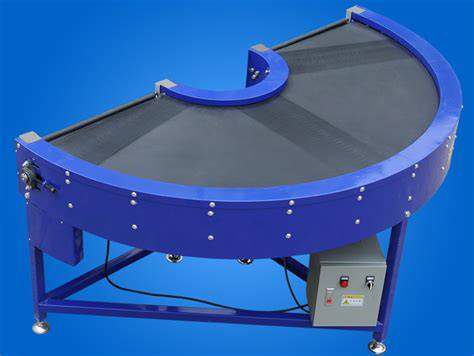
The WINDA Belt Turning Machine is a precision steering conveyor built for automated material-handling production lines. It is commonly matched with straight belt conveyors, roller conveyors, and sorting machines to realize smooth material diversion at 30, 45, 90, and 180 degrees according to on-site layout requirements. The equipment connects the whole automatic production line, solves limited-workshop-space and complicated-route-planning problems, and makes material transportation more flexible and efficient.
With strong universality, it handles cartons, parcels, turnover boxes, food and electronic components, and pharmaceutical packages across e-commerce, express, food, pharmaceutical, electronics, and daily-chemical industries.
| Parameter | Specification |
|---|---|
| Turning Angle | 30 deg / 45 deg / 90 deg / 180 deg (Custom angles available) |
| Conveying Speed | 0.1 - 1 m/s (Variable frequency speed regulation) |
| Standard Belt Width | 500 mm / 800 mm / 1000 mm / 1200 mm / 1400 mm |
| Inner Turning Radius | 1270 mm - 2200 mm (Optional) |
| Motor Power | 0.75 kW - 2.2 kW |
| Frame Material | Carbon steel with plastic spray (Standard) / 304 Stainless steel (Optional) |
| Belt Material | PVC (Standard) / PU / Anti-static / Food-grade (Optional) |
| Operation Mode | Continuous / Intermittent | Single or Multi-layer structure |
A carbon steel integral welding frame with sandblasting and anti-rust spray delivers a rigid, vibration-free platform; a full stainless-steel option serves food and pharmaceutical wash-down environments.
The standard wear-resistant PVC belt is joined by optional food-grade PU, anti-static, anti-slip, oil-resistant, and high-temperature belts, letting one curve design serve clean rooms, electronics, and parcel sorts.
A VFD motor with tapered turning rollers gives uniform power output and speed adjustable from 0.1 to 1 m/s, with stable, impact-free start and stop that protects fragile loads.
Built-in guiding components and automatic tensioning compensate belt tension in real time, eliminating deviation, slack, and abnormal noise while lowering the failure rate.
Precision-machined, dynamically balanced parts ensure low-noise operation; the belt and guiding structure protect against scratch and extrusion for finished and retail-ready cartons.
Turning angle, belt width, inner radius, height, speed, and frame material are all customizable, with double- or multi-layer structures available for complex, high-density layouts.
Parcel sorting and carton conveying paired with automated sorters give high-throughput centers the flexibility to feed multiple zones from one infeed.
Finished-product and package transport with the food-grade PU belt option meets HACCP requirements, keeping the curve safe for edible-goods lines.
A cleanroom-compatible stainless-steel model handles medicine boxes and sterile material delivery without contaminating the environment.
Anti-static belt configuration protects precision electronic components from ESD damage during conveying, essential for board and device assembly.
Automatic circulation of boxed and bagged finished goods in cosmetics, toiletries, and household products keeps secondary-packaging lines moving.
Baggage check-in and reclaim carousels rely on reliable curved conveying to move luggage smoothly around terminal geometry.
In 2026, curves are increasingly fitted with drives that accept speed setpoints from a central WES, dynamically matching the rhythm of upstream scanners and downstream sorters to smooth flow and cut jams.
As businesses chase seasonal peaks, demand for bolt-together, relocatable conveyor sections is rising; standardized belt curves with fixed radius families let integrators re-plan a floor in days.
Food, pharmaceutical, and export markets push stainless-steel and easy-clean belt curves, and suppliers offering 304 stainless frames with PU belts capture a premium compliance-driven segment.
With electricity a growing line cost, IE3/IE4-class VFD motors and regenerative braking on decelerating sections are moving from optional to expected, trimming kilowatt-hours per parcel.
Vibration and temperature telemetry on bearings and drive units let operators schedule service before failure, a key enabler for lights-out warehouses that cannot tolerate unplanned stops.
Buyers now weigh total lifecycle cost: a robust, repairable frame with available spare parts beats a cheap disposable unit, making longer warranties and local spare-part stocking selection criteria.
A belt turning machine pays back quickly by removing manual re-orientation labor and enabling a denser layout that defers expansion capital. VFD soft-start, automatic tensioning, and low-noise operation reduce damage and downtime, while one scalable base design keeps spare-part inventory small.
Q1: What is a belt turning machine?
A belt turning machine (also called a belt curve conveyor or corner turning conveyor) is a specialized steering conveyor that smoothly redirects materials at specific angles (typically 30, 45, 90, or 180 degrees) within automated production lines. It connects straight conveyors and optimizes space utilization in logistics facilities.
Q3: What belt widths are available?
Standard belt widths are 500 mm, 800 mm, 1000 mm, 1200 mm, and 1400 mm. Custom widths can be manufactured to your specific application. The inner turning radius ranges from 1270 mm to 2200 mm depending on belt width and turning angle.
Q4: Can it be used in the food industry?
Yes. For food and pharmaceutical applications we offer full 304 stainless-steel frame construction combined with food-grade PU belts. These configurations meet HACCP hygiene standards and are easy to clean, making them suitable for clean-room environments.
In 2026, the belt turning machine is no longer a passive bend in the line; it is an intelligent, software-tuned node that helps operators win back floor space, cut labor, and protect product through every corner. Specifying the right curve - with the right belt, frame, and drive - is a small decision with an outsized impact on throughput and total cost of ownership.
About WINDA. WINDA is a factory-direct manufacturer of logistics automation equipment, CE certified and ISO 9001 qualified, providing custom engineering, global shipping, and 24-hour technical response. Contact our team to specify a belt curve optimized for your layout.
Sorter
Wechat QR code
wechat number:Copyright © 2022-2023 Winda, inc. All rights reserved