ROI Analysis of Logistics Automation Projects: 2026 Investment Guide and Best PracticesROI Analysis of Logistics Automation Projects: 2026 Investment Guide and Best Practices
Understanding ROI in Logistics Automation
Return on Investment (ROI) is a critical metric for evaluating the financial viability of logistics automation projects. In 2026, with automation technologies becoming more affordable and powerful, calculating ROI has become more complex but also more important than ever.
This comprehensive guide provides logistics managers and business owners with practical frameworks for ROI analysis, key factors to consider, and real-world case studies.
Key Components of ROI Calculation
1. Initial Investment Costs
The total cost of automation implementation includes:
- Equipment Costs: Sorting systems, conveyors, robots, AS/RS, etc.
- Software Costs: WMS, WCS, integration platforms
- Installation and Integration: Professional services, customization, testing
- Training and Change Management: Staff training, process redesign
- Infrastructure Modifications: Electrical, networking, facility upgrades
2. Operational Cost Savings
Automation reduces ongoing operational costs through:
- Labor Cost Reduction: Fewer manual workers needed for repetitive tasks
- Error Reduction: Automated systems have 99.9%+ accuracy vs. 95-98% for manual
- Space Optimization: Higher density storage reduces facility costs
- Energy Efficiency: Modern equipment consumes 30-40% less energy
- Maintenance Predictability: IoT-enabled predictive maintenance reduces downtime
3. Revenue Enhancement
Automation can increase revenue through:
- Faster Order Fulfillment: Same-day or next-day delivery capability
- Improved Customer Satisfaction: Accurate orders, real-time tracking
- Increased Throughput: Handle peak seasons without additional headcount
- New Service Offerings: Value-added services enabled by automation
- Competitive Advantage: Faster, cheaper, more reliable operations
2026 ROI Benchmarks and Industry Standards
Typical ROI Timeframes
Based on 2026 industry data, typical ROI timeframes for logistics automation projects are:
- Conveyor Systems: 1.5-2.5 years
- Sortation Systems: 2-3 years
- Automated Storage (AS/RS): 3-5 years
- Robotics and AMRs: 1-2 years
- WMS Software: 1-1.5 years
Factors Affecting ROI
Several factors can significantly impact ROI timeframe:
- Scale of Operation: Larger volumes justify higher automation investment
- Labor Costs: Higher labor costs accelerate ROI
- Order Profile: High SKU count and order complexity benefit more from automation
- Growth Rate: Fast-growing companies see faster ROI due to scalability
- Technology Selection: Modular, scalable solutions have better ROI profiles
ROI Calculation Methodology
Step 1: Define Project Scope and Objectives
Clearly define what the automation project aims to achieve:
- Increase throughput by X%
- Reduce labor costs by $Y per year
- Improve accuracy to Z%
- Reduce order cycle time by W hours
Step 2: Quantify Costs and Benefits
Create detailed cost and benefit projections for 3-5 years:
| Category | Year 0 | Year 1 | Year 2 | Year 3 |
|---|
| Equipment Cost | -$500,000 | $0 | $0 | $0 |
| Labor Savings | $0 | $200,000 | $200,000 | $200,000 |
| Error Reduction | $0 | $50,000 | $50,000 | $50,000 |
| Maintenance Cost | $0 | -$30,000 | -$30,000 | -$30,000 |
| Net Cash Flow | -$500,000 | $220,000 | $220,000 | $220,000 |
Step 3: Calculate ROI Metrics
Key ROI metrics to calculate:
- Simple ROI: (Total Benefits - Total Costs) / Total Costs × 100%
- Payback Period: Initial Investment / Annual Net Benefits
- Net Present Value (NPV): Sum of discounted cash flows
- Internal Rate of Return (IRR): Discount rate that makes NPV = 0
Case Study: Sortation System ROI Analysis
Project Overview
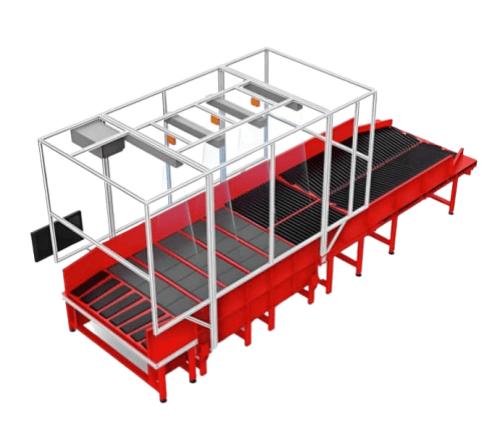
A mid-sized e-commerce company implemented a cross-belt sortation system to handle growing order volumes.
Initial Investment: $750,000
- Equipment: $500,000
- Installation and Integration: $150,000
- Training: $50,000
- Contingency: $50,000
Annual Benefits:
- Labor Savings: $300,000 (10 workers × $30,000)
- Error Cost Reduction: $100,000 (from 5% to 0.1% error rate)
- Throughput Increase: $200,000 (additional revenue from faster fulfillment)
- Annual Maintenance: -$40,000
- Net Annual Benefit: $560,000
ROI Results:
- Payback Period: 1.34 years ($750,000 / $560,000)
- 3-Year ROI: 124% (($560,000 × 3 - $750,000) / $750,000)
- 5-Year NPV (10% discount): $1,372,000
Best Practices for ROI Analysis
1. Include All Relevant Costs
Don't forget hidden costs such as:
- Downtime during implementation
- Ongoing training for new employees
- Software licensing and support fees
- Infrastructure upgrades (power, network, flooring)
2. Use Conservative Assumptions
When estimating benefits, use conservative assumptions:
- Assume 80% of projected labor savings
- Include 10-15% contingency for cost overruns
- Consider worst-case scenarios (economic downturn, demand drop)
3. Consider Qualitative Benefits
Some benefits are hard to quantify but still valuable:
- Improved employee safety and satisfaction
- Enhanced company image and brand value
- Flexibility to adapt to future changes
- Data visibility for better decision-making
Conclusion
ROI analysis is essential for making informed investment decisions in logistics automation. While the calculations can be complex, the effort is warranted given the significant capital investment involved.
Key takeaways for 2026:
- ROI timeframes have shortened due to more affordable technologies
- Labor savings remain the primary driver of ROI
- Modular, scalable solutions offer better ROI flexibility
- Don't forget to include all costs and use conservative assumptions
- Consider both quantitative and qualitative benefits
Need help with ROI analysis for your logistics automation project? Our team of experts can provide detailed ROI calculations, vendor-neutral technology recommendations, and implementation support. Contact us today for a consultation.