

As parcel and mail volumes keep climbing across e-commerce, courier, and postal networks, the humble envelope has become a focal point for automation investment. The Auto Express Envelope Sorting Machine (Model WDA-ES-5000) from Winda represents a mature, field-proven approach to high-throughput envelope sorting built on intelligent barcode recognition. This article examines the technology behind the WDA-ES-5000, its engineering features, the scenarios where it delivers the fastest payback, and the broader 2026 market trends shaping envelope and flat-mail automation.
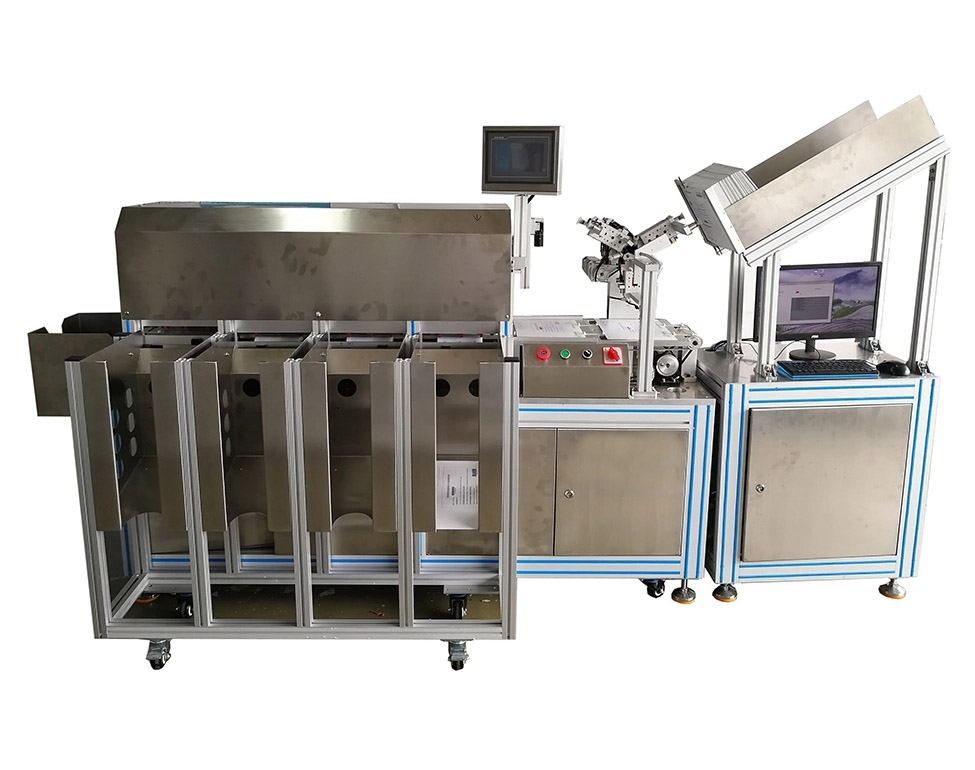
Designed around real customer requirements, the WDA-ES-5000 automatically sorts express envelopes that carry a receiving label, identifies the barcode printed on that label, and routes each envelope into the correct receiving box based on the decoded barcode information. Throughput reaches roughly 5,000 envelopes per hour at a 99.5% sorting accuracy, with eight standard collecting boxes that can be customized to match route or destination logic.
The machine is built for logistics distribution centers, courier stations, e-commerce warehouses, and postal service centers. Its fully automated workflow removes manual sorting labor while keeping accuracy high enough for downstream SLA compliance. The control system runs on an industrial PC, giving operators a real-time view of current throughput and per-box accumulation counts.
| Parameter | Specification |
| Model | WDA-ES-5000 |
| Sorting Capacity | About 5,000 envelopes / hour |
| Sorting Accuracy | 99.5% |
| Collecting Boxes | 8 sets (customizable quantity) |
| Dimension (L x W x H) | 2600 x 1500 x 1600 mm |
| Weight | 500 Kg |
| Power Source | AC 220V, 50/60 Hz |
| Power Consumption | About 2 KW |
| Material Box Height | About 600 mm |
| Control System | Industrial PC |
| Identification | Industrial-grade high-speed barcode recognizer (camera upgrade available) |
The equipment is purpose-built for the automatic sorting of express envelopes. Material is placed into the feeder, automatically conveyed, identified, sorted, received, and any exception item is eliminated - all without manual handling on the main line.
The main cycle is: put material, automatic feeding, barcode identification, sorting, receiving, and eliminating. A servo motor drives a synchronous belt to transfer express envelopes smoothly between stations.
Feeding uses a rotary suction design with a stable structure. The humanized feeding box makes loading material convenient and reduces jams caused by misfeeds.
The machine adopts an industrial-grade high-speed barcode recognizer that reads common 1D and 2D barcodes. It can be upgraded to camera-based recognition on demand for damaged or low-contrast labels.
The grading mechanism uses a roller-type design with a simple structure that does not damage express envelopes during sorting, protecting print quality and label integrity.
The equipment ships with eight collecting boxes. Operators can freely set the sorting category for each box and customize the quantity of sorting boxes to match routing rules.
Envelopes with unreadable data, or with data not present in the database, automatically enter an elimination box for manual processing - preventing misroutes while keeping the line running.
The whole control system is managed by an industrial PC to ensure stable, coordinated operation. The display interface is easy to operate and shows real-time current operation and the receiving quantity of each sorting box.
Automatically sort express envelopes by destination, improving distribution efficiency and reducing manual labor during peak seasons.
Sort incoming and outgoing envelopes quickly, reducing customer waiting time and improving service quality at the last mile.
Sort shipping labels and return envelopes efficiently, supporting high-volume e-commerce operations with consistent accuracy.
Handle large volumes of mail sorting with high accuracy, reducing errors and improving service reliability for registered and standard mail.
Across logistics and postal operations, recruiters continue to struggle with sorting-line staffing. Machines like the WDA-ES-5000 that cut manual sorting labor cost by up to 70% are moving from "nice to have" to core capital planning. In 2026, small and mid-size courier stations are adopting tabletop and modular envelope sorters rather than waiting for full-line retrofit.
Industrial barcode scanners remain the cost-effective default, but camera-based recognition is becoming a standard upgrade path. As label quality varies across carriers, hybrid systems that combine laser barcode reading with vision OCR deliver higher first-pass read rates. The WDA-ES-5000's camera upgrade option fits directly into this trend.
Operators no longer want fixed physical chutes tied to a single route. Configurable collecting boxes - where routing logic is set in software - let a single machine serve changing delivery zones, promotional waves, and returns flows. Software-defined routing is now a baseline expectation for new installs.
Not every site needs 10,000+ items per hour. The 5,000 envelopes/hour class is emerging as the sweet spot for courier stations and regional warehouses that need automation without the footprint and capital of a full cross-belt line. 2026 buying behavior favors fit-for-purpose throughput over maximum speed.
As carriers tighten delivery SLAs, mis-sort penalties rise. Automatic elimination boxes that quarantine unreadable or unknown labels protect overall accuracy and create a clean exception queue for manual review. In 2026, exception handling is treated as a first-class feature, not an afterthought.
Real-time dashboards that show per-box counts and live throughput are becoming standard. The PC control system on the WDA-ES-5000 aligns with the broader shift toward connected, data-visible sorting equipment that feeds warehouse management and route-planning systems.
For logistics companies, the WDA-ES-5000 reduces manual sorting labor cost by about 70%, lifts speed to 5,000 envelopes per hour, and sustains 99.5% sorting accuracy with real-time status monitoring. For courier stations, customizable boxes, automatic elimination of unrecognized envelopes, and a compact, space-saving design make it a practical first automation step. Customer feedback highlights stable rotary suction feeding and an easy-to-operate interface.
Q: Can the number of sorting boxes be changed?
A: Yes. The standard configuration is eight collecting boxes, and the quantity can be customized to match routing requirements.
Q: What if a barcode cannot be read?
A: Envelopes with unreadable or unknown barcodes are routed to an automatic elimination box for manual processing, so they never cause a misroute.
Q: Is camera recognition supported?
A: The machine uses an industrial-grade high-speed barcode recognizer by default, with an optional camera-based recognition upgrade for demanding label conditions.
Q: What power supply is required?
A: AC 220V, 50/60 Hz, with power consumption around 2 KW.
The Auto Express Envelope Sorting Machine WDA-ES-5000 shows where 2026 envelope automation is heading: right-sized throughput, software-defined routing, hybrid barcode and camera recognition, and built-in exception handling - all wrapped in a compact, PC-controlled footprint. For courier stations, logistics hubs, e-commerce warehouses, and postal centers facing labor pressure and tighter SLAs, this class of equipment offers one of the fastest, lowest-risk automation paybacks available today.
Ready to upgrade your envelope sorting efficiency? Contact Winda for a free quote and a customized solution.
Email: [email protected] | WhatsApp: +86 186 2085 0485
Sorter
Wechat QR code
wechat number:Copyright © 2022-2023 Winda, inc. All rights reserved