

The parcel handling industry entered 2026 facing a structural squeeze that no amount of manual labour can resolve. Order volumes keep climbing, delivery promises keep shortening, and warehouse rent in tier-one logistics corridors keeps rising. Operators can no longer solve throughput problems by simply adding floor space or headcount. Instead, the winning strategy has shifted toward vertical utilisation of existing buildings and toward sorting equipment that routes parcels into many destinations without demanding a large horizontal footprint. Against this backdrop, the Z-Type Diverging Sorting Machine has moved from a niche transitional conveyor into a mainstream multi-lane routing solution.
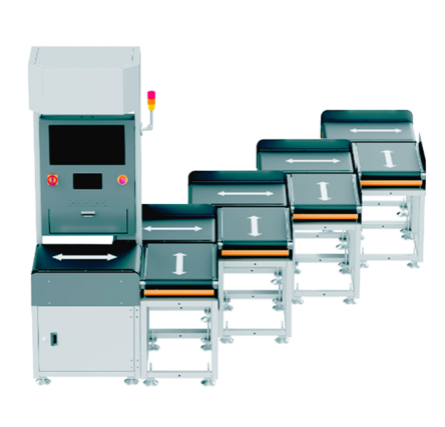
Conventional linear diverters are effective but greedy with space. Every additional destination lane extends the machine horizontally, and a ten-lane installation can easily consume thirty metres of clear floor. In older distribution buildings and urban micro-fulfilment sites, that space simply does not exist. The Z-Type approach solves this by folding the conveyor path vertically: parcels travel along a Z-shaped route that lifts them between three and five metres while the diverging mechanism assigns them to their target lane.
The commercial consequence is significant. Facilities that previously required a building extension to expand sorting capacity can now add lanes upward instead of outward. Several regional express hubs that retrofitted Z-path diverters during 2025 reported that they doubled destination lanes while occupying roughly the same ground area as their previous four-lane linear system. In a market where warehouse leasing costs have risen for six consecutive quarters, that trade-off is compelling on its own.
The Z-Type Diverging Sorting Machine is a conveyor-based diverter engineered for logistics hubs, e-commerce fulfilment centres and postal distribution facilities. A single infeed line accepts mixed parcel flow; an integrated identification stage reads the destination; the Z-shaped conveyor path then elevates the item to the target level, where the diverging mechanism pushes it into one of up to ten assigned lanes.
Throughput sits between 2,000 and 4,000 pieces per hour depending on lane count and parcel mix, with sorting accuracy above 99 percent. Critically for operators handling fragile electronics or high-value goods, the smooth Z-path transition minimises tilting and impact compared with hard-stop pusher diverters. That gentleness is not a marketing footnote: damage claims are one of the fastest-growing hidden costs in last-mile logistics, and equipment that reduces them pays for itself outside the throughput calculation.
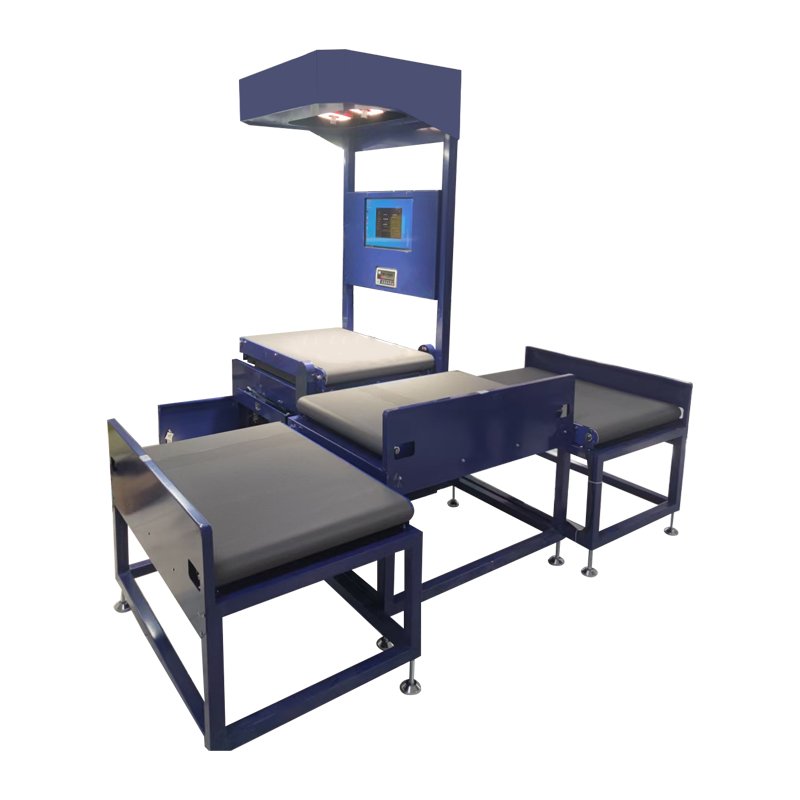
| Parameter | Specification | Remarks |
|---|---|---|
| Throughput Capacity | 2,000 - 4,000 pcs/hour | Adjustable by lane count |
| Number of Lanes | 2 - 10 lanes | Customizable configuration |
| Belt Width | 300 - 600 mm | Accommodates diverse parcel sizes |
| Z-Elevation Height | 3 - 5 meters | Vertical elevation capability |
| Sorting Accuracy | Above 99% | High-precision diverging |
| Power Supply | 380V / 50Hz | Customizable to local grid |
| Control System | PLC + HMI Touch Screen | User-friendly interface |
| Communication Protocol | TCP/IP, Modbus, PROFINET | Flexible WMS integration |
The Z-shaped conveyor route lifts parcels between sorting levels while keeping product flow continuous. There is no accumulation buffer required at the elevation stage, which means the machine does not introduce a bottleneck when it climbs. For brownfield retrofits, this is the single most valuable attribute of the design.
Between two and ten diverging lanes can be specified, each independently controlled and mapped to a destination in the warehouse management system. Operators typically start with four to six lanes and expand as route density grows, avoiding the capital waste of over-specifying on day one.
A 300 to 600 millimetre belt range covers everything from small envelopes and polybags to standard cartons and medium boxes. In practice this means one machine can serve both a documents lane and a general merchandise lane without mechanical reconfiguration.
Standard industrial protocols allow the diverter to sit inside an existing conveyor network, feed a downstream cross-belt sorter, or hand off to an AGV fleet. The PLC and HMI stack is conventional, so plant maintenance teams do not need vendor-specific training to run diagnostics.
The smooth transition profile keeps parcel orientation stable through the elevation, reducing tilt and impact events that cause internal packaging damage. This is increasingly relevant as consumer electronics, cosmetics and pharmaceutical shipments make up a larger share of parcel mix.
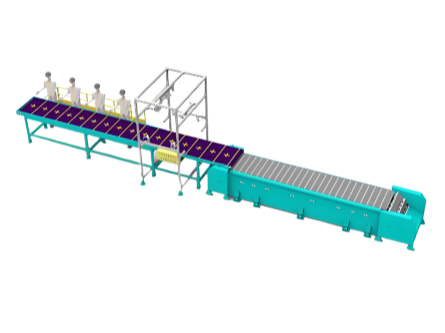
E-commerce fulfilment centres. Multi-carrier operations need parcels separated by courier before they reach the dock. A six-lane Z-diverter placed after the packing stations handles carrier segregation at a fraction of the cost of a full cross-belt loop.
Express distribution hubs. Regional hubs use the diverter as a pre-sort stage that feeds primary sortation, splitting inbound flow by service level or geographic zone so that the main sorter runs at a steadier, more predictable rate.
Postal and mail processing. Mixed letter, flat and small-parcel streams benefit from the wide belt range, allowing a single machine to route items that would otherwise need separate handling lines.
Third-party logistics warehouses. Contract logistics providers value the modularity because client mixes change annually. Lanes can be reassigned in software, and the machine can be relocated within the building without structural work.
Vertical space becomes the new capacity frontier. With industrial land constrained near urban consumption centres, buyers are explicitly specifying equipment that exploits building height. Z-path elevation has moved from a nice-to-have into a written requirement in an increasing share of tenders.
Scalable capital spending. After several volatile demand cycles, operators are reluctant to commit to monolithic sortation projects. Machines that allow incremental lane expansion match the prevailing preference for staged investment tied to proven volume.
Damage reduction as a measurable KPI. Parcel damage now appears on operational dashboards alongside throughput and accuracy. Gentle-handling conveyance is being evaluated on its claims-cost impact rather than treated as a soft benefit.
Open protocol integration. Buyers increasingly reject proprietary control ecosystems. Support for TCP/IP, Modbus and PROFINET is now a baseline qualification rather than a differentiator, and vendors without it are being filtered out early in procurement.
Energy efficiency scrutiny. Rising industrial electricity tariffs have made drive efficiency and idle-state power consumption part of the evaluation matrix, particularly for facilities operating extended or continuous shifts.
Labour scarcity persistence. Recruitment difficulty for warehouse operatives has not eased. Automation that removes manual routing decisions continues to deliver payback periods that finance teams find defensible.
Q: How does a Z-Type diverter differ from a conventional linear diverter?
A: A linear diverter extends horizontally as lanes are added, consuming floor space in direct proportion to destination count. A Z-Type diverter folds the path vertically, elevating parcels three to five metres so that additional lanes can be stacked rather than strung out. The result is comparable routing capability in a substantially smaller ground footprint.
Q: What throughput should I expect in a real operation?
A: Rated capacity is 2,000 to 4,000 pieces per hour. Real-world figures land toward the upper end when parcel dimensions are consistent and infeed singulation is clean, and toward the lower end with highly mixed sizes or irregular items. Lane count also matters, as more destinations mean more diverging actions per unit time.
Q: Can lanes be added after installation?
A: Yes. The modular architecture supports expansion up to ten lanes. Most operators specify the mechanical frame for their expected maximum and populate diverging units progressively, which keeps initial capital lower while avoiding structural rework later.
Q: Is it suitable for fragile or high-value goods?
A: The smooth Z-path transition is specifically designed to limit tilting and impact, which makes it appropriate for electronics, cosmetics and other damage-sensitive categories. Operators handling such goods should still validate with a sample run of their own packaging during commissioning.
Q: How does it connect to our warehouse management system?
A: The control stack exposes TCP/IP, Modbus and PROFINET interfaces. Destination assignments are received from the WMS or a middleware layer, and sorting confirmations are returned per parcel, allowing full traceability without custom protocol development.
The economics of parcel sortation in 2026 reward equipment that delivers routing flexibility without demanding new floor space. The Z-Type Diverging Sorting Machine addresses that requirement directly, combining two to ten configurable lanes, throughput of up to 4,000 pieces per hour, above 99 percent accuracy and gentle handling within a vertically folded footprint. For operators facing rising rent, constrained buildings and unpredictable volume growth, it represents a pragmatic route to capacity expansion that scales in step with demand rather than ahead of it.
Request Technical Consultation
WINDA supplies customized Z-Type Diverging Sorting Machines configured to your parcel profile, lane requirements and building constraints. Our engineering team provides layout planning, throughput modelling and integration support.
Email: [email protected] | WhatsApp: +86 186 2085 0485 | View Product Details
Sorter
Wechat QR code
wechat number:Copyright © 2022-2023 Winda, inc. All rights reserved