

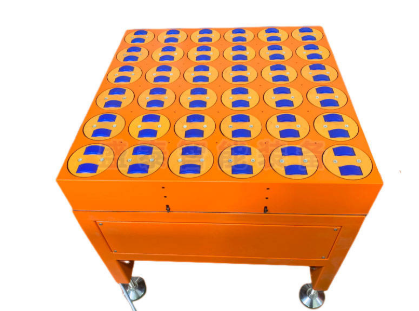
In 2026, the logistics industry has reached an inflection point where two once-separate technology stacks, digital twin simulation and smart sortation control, are fusing into a single self-aware operational layer. For operators running cross-border parcels, e-commerce fulfillment, and pharmaceutical distribution, the result is a warehouse that not only moves boxes faster but understands, predicts, and re-optimizes its own behavior in real time.
A digital twin is no longer a static 3D model viewed on a control-room screen. The 2026 definition is a continuously synchronized virtual replica that ingests live telemetry from every sorter, scanner, robot, and conveyor segment. The twin runs the same routing logic as the physical system, then projects outcomes seconds to hours ahead. When a cross-belt sorter detects a jammed induction point, the twin has usually already simulated three recovery paths and recommended the one with the lowest downstream delay.
The decisive shift this year is bidirectional coupling: the physical system executes the twin's recommendation, and the twin immediately re-ingests the result. This closed loop turns the warehouse from a reactive machine into a learning system.
Sortation is the highest-throughput, most data-rich process in any fulfillment center. A single high-speed sorter can touch 20,000 parcels per hour, each generating a scan, a weight, a dimension, and a routing decision. That density of structured events is exactly what a digital twin needs to stay accurate. Three factors make 2026 the breakout year:
A production-grade digital twin for sortation in 2026 is built from five layers. The table below summarizes the functional split that leading system integrators now ship as a bundled offering.
| Layer | Function | 2026 Maturity |
|---|---|---|
| Telemetry Capture | PLC, scanner, weigh-in-motion, and robot state streaming at 10-50 Hz | Mainstream |
| Virtual Model | Discrete-event simulation of the exact sorter topology and routing rules | Mainstream |
| Prediction Engine | Short-horizon throughput and jam probability forecasting | Growing |
| Optimization Loop | Dynamic lane balancing and induction rate throttling | Growing |
| Human Console | Exception triage, what-if sandbox, and KPI dashboards | Mainstream |
During promotional events, parcel mix shifts sharply toward small, similar-sized apparel parcels that confuse vision systems. The twin pre-loads a surge profile and instructs the sorter to widen lane spacing and slow the induction belt before the wave arrives, holding accuracy above 99.5 percent without manual tuning.
By tagging each parcel with its destination regime, the twin routes items needing inspection to a dedicated output, letting the rest bypass the bottleneck. Operators report 18 to 25 percent faster clearance versus rule-only sorting.
Vibration and current draw from sorting wheels feed the twin, which flags a declining motor days before failure. Maintenance is scheduled into low-traffic windows, turning unplanned downtime into a planned, invisible event.
Analyst consensus for 2026 places digital-twin-enabled sortation in the early-majority phase. Three market movements define the year:
Regional adoption is led by East Asia and Western Europe, where labor cost and parcel density make the business case strongest, followed by North America's rapid 3PL modernizations.
Facilities evaluating the convergence in 2026 should follow a staged path rather than a big-bang cutover:
The main risks are data quality and over-trust. A twin is only as good as its telemetry; a misconfigured scanner silently corrupts the model. Operators should keep a manual override and audit the twin's recommendations for the first quarter of live operation. Cybersecurity also rises in priority, because the twin becomes a high-value target that can influence physical throughput.
By the end of 2026, the leading fulfillment centers will no longer ask "how fast can we sort" but "how well does our warehouse understand itself." The convergence of digital twin and smart sortation is the foundation of that self-awareness: a facility that forecasts its own peaks, heals its own jams, and prices its own capacity. For equipment buyers, the practical takeaway is clear: when specifying a new sorter, ask whether it ships with a native twin and an open telemetry interface, because that capability will define its resale and upgrade value for the next decade.
WINDA builds high-speed sortation systems engineered for digital-twin integration, from cross-belt and swivel-wheel sorters to DWS-enabled induction lines. For specification sheets and 2026 reference deployments, contact info@zowinda.com or reach the team via WhatsApp at +86 186 2085 0485.
Sorter
Wechat QR code
wechat number:Copyright © 2022-2023 Winda, inc. All rights reserved