

Industry News | Published August 23, 2026
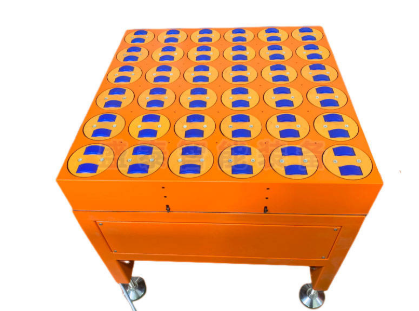
In 2026, the logistics industry has moved decisively beyond reactive repair. Parcel sortation hubs - the backbone of e-commerce fulfillment and cross-border distribution - are now being managed through predictive maintenance and digital twin technology. Rather than waiting for a belt motor to fail during peak season, operators use sensor data, machine learning, and a live virtual replica of the physical line to spot degradation days or weeks before it causes downtime. This article examines how predictive maintenance and digital twins are reshaping sortation system reliability, what the market looks like this year, and how buyers should evaluate these capabilities when selecting new equipment.
Sortation centers run 18 to 24 hours a day in many regions. A single unplanned stoppage on a cross-belt sorter or a swivel-wheel diverter can block tens of thousands of parcels per hour. Traditional scheduled maintenance is wasteful: it either services healthy components too early or misses failures that develop between intervals. In 2026, the cost of industrial IoT sensors has fallen far enough that attaching vibration, temperature, current, and acoustic monitors to every key drive is economical. The data feeds models that learn each machine's normal signature and raise an alert the moment that signature drifts.
A digital twin is a real-time virtual copy of the sortation system, including conveyors, scanners, diverters, and the control logic that coordinates them. In 2026, leading operators no longer treat the twin as a design-phase drawing. It is continuously synchronized with live telemetry, so engineers can simulate a bearing fault, a throughput spike, or a new routing rule before applying it to the real line. The twin also serves as the training environment for the predictive models, letting teams validate a maintenance recommendation against historical failure patterns without risking production.
| Capability | What it means in 2026 |
|---|---|
| Monitoring layer | Vibration, temperature, motor current, acoustic, and encoder feedback on every drive and diverter. |
| Data cadence | Edge pre-processing at 1 to 10 kHz, aggregated to cloud summaries every 5 to 60 seconds. |
| Failure prediction | Remaining-useful-life estimates for bearings, belts, and gearboxes, with confidence scores. |
| Twin synchronization | Sub-minute state sync between physical PLC tags and the virtual model. |
| Integration | REST or MQTT export to WMS, MES, and CMMS; open schema, no vendor lock-in. |
| Alerting | Tiered warnings (advisory, schedule, urgent) with recommended action and spare-part link. |
The clearest returns appear in three places. First, high-volume cross-belt and swivel-wheel sorters, where a single drive failure cascades into a line stop. Second, sites with labour shortages, where planned windows are easier to staff than emergency call-outs. Third, operations with strict service-level agreements, where a missed dispatch window carries penalty fees. In each case, shifting from reactive to predictive maintenance typically cuts unplanned downtime by 30 to 50 percent and extends component life by 15 to 25 percent according to 2026 operator surveys.
Analysts broadly agree that predictive maintenance for material handling is now a growth market rather than a pilot. Spending on sensing and analytics for warehouse automation is expected to expand through 2026 as mid-size hubs adopt retrofit kits that avoid full line replacement. Digital twin platforms are converging with the sortation controller itself, so the model is no longer a separate dashboard but part of the machine's brain. The differentiator in 2026 is not whether a vendor offers a twin, but how accurately it predicts and how openly it shares data with the rest of the site's software stack.
When evaluating a new sortation system or a retrofit, ask four questions. Does the monitoring cover the actual failure modes of your line, not just generic health scores? Can you export the raw signals, or are you confined to the vendor's portal? Is the digital twin updated live, or rebuilt manually after each change? And finally, does the recommendation include the specific spare part and the maintenance window, so the alert leads straight to action? Systems that answer yes to all four will deliver value; those that only show a green or red light will disappoint.
WINDA (wdsort.com) designs and manufactures sortation equipment for parcel, e-commerce, and industrial logistics, including cross-belt sorters, swivel-wheel units, and the control software that keeps them running. For engineering discussions on predictive maintenance and digital-twin ready sortation, contact the team at info@wdsort.com or via WhatsApp at +86 186 2085 0485.
This article is provided for industry reference by WINDA. Technical specifications vary by configuration and should be confirmed with the manufacturer for each application.
Sorter
Wechat QR code
wechat number:Copyright © 2022-2023 Winda, inc. All rights reserved