

As e-commerce orders fragment into smaller batches with more destinations, the Z-Type diverging sorting machine has become one of the most practical answers for mid-volume logistics hubs. WINDA's Z-shaped diverging sorter combines a continuous conveyor path, up to ten divert lanes, an industrial camera, and an integrated scale in one semi-automated line. This article reviews the trends reshaping this equipment class in 2026 and the economics behind payback.
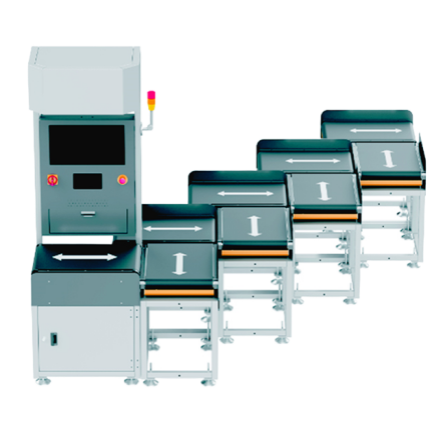
A Z-Type diverging sorter uses a Z-shaped elevation layout to move parcels between conveyor levels while diverting them into two to ten destination lanes. The geometry solves what a linear sorter cannot: many facilities must lift goods from a mezzanine picking floor and fan them across a dispatch area within a short horizontal footprint. The Z-path absorbs the vertical transition and the lane fan-out in one continuous motion, so parcels are handled gently and never queue at a transfer point.
An electronic platform or rolling scale integrated with an industrial camera captures weight and barcode in a single pass at induction. Processing reaches 2,000 pieces per one to three seconds per lane group, with weighing accuracy of plus or minus 1 gram and code-reading accuracy of 99.9%.
| Parameter | Specification | Remarks |
|---|---|---|
| Throughput Capacity | 2,000 - 4,000 pcs/hour | Adjustable by lane count |
| Number of Divert Lanes | 2 - 10 lanes | Customizable configuration |
| Belt Width | 300 - 600 mm | Accommodates diverse parcel sizes |
| Z-Elevation Height | 3 - 5 meters | Vertical elevation capability |
| Sorting Accuracy | at least 99% | High-precision diverging |
| Weighing Accuracy | plus or minus 1 g | Integrated scale at induction |
| Parcel Size Range | 50 mm3 - 400 mm3 | Regular and irregular shapes |
| Power Supply | 380V / 50Hz (customizable) | Industrial standard |
| Control System | PLC + HMI touch screen | Operator-friendly interface |
| Communication Protocol | TCP/IP, Modbus, PROFINET | Flexible system integration |
The largest change in 2026 is that dimensioning no longer happens in a separate quality-control room. The scale and camera sit at the induction station, so every parcel is weighed and identified the moment it enters. That capture confirms the divert decision, feeds freight-audit billing, and builds a traceability record. Courier chargebacks stem from declared weight diverging from measured weight, and a scale accurate to one gram settles the question before dispatch.
Legacy laser scanners fail on crumpled labels, shrink-wrapped polybags, and angled labels. Current systems pair camera front ends with deep-learning OCR that rebuilds a destination from barcode fragments, address text, sender history, and parcel geometry. The 99.9% accuracy quoted for WINDA machines reflects that stacked approach. Exception handling improves too: rather than stopping for a no-read, the controller diverts the parcel to an exception lane and logs the pattern, exposing which suppliers produce bad labels.
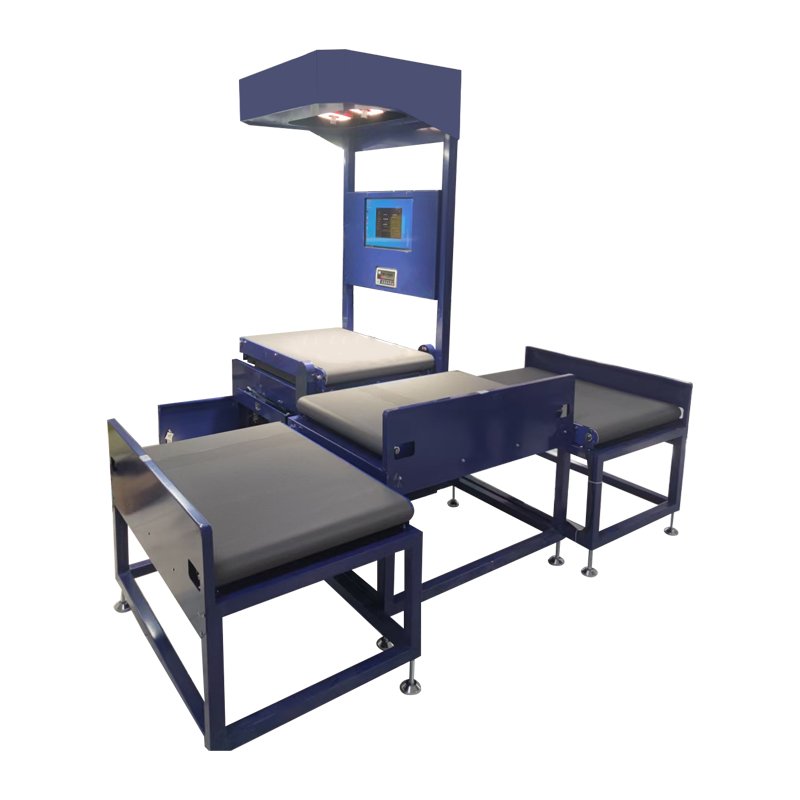
A sorting line is only as useful as the systems it can talk to. The 2026 generation ships with PLC plus HMI touch-screen control and native TCP/IP, Modbus, and PROFINET support. That matters because most sites run a mixed landscape: a warehouse control system on TCP/IP, legacy conveyors on Modbus, a plant network on PROFINET. A sorter speaking all three avoids a middleware project, and lane recipes stay on the controller for supervisors to change at the HMI.
Fixed-capacity sorters age badly, because a hub that outgrows its machine must replace it. The modular Z-platform inverts that logic: the frame accepts two to ten divert lanes, so an operator starts with the count matching today's volume and bolts on lanes as destinations multiply. Belt width from 300 to 600 mm and Z-elevation from 3 to 5 meters are configurable at order, letting one architecture serve both a compact urban depot and a regional cross-dock.
Sustainability requirements now appear in procurement documents, not only corporate reports. The Z-path keeps parcels moving instead of accelerating and stopping them at each station, cutting mechanical wear and the energy spent re-accelerating loads. With 380V three-phase drives and variable-frequency control, energy per parcel falls against older start-stop layouts. Gentle handling pays commercially too: soft bags, boxed liquid, and blister packs survive without the corner crush of high-impact shoe sorters.
| Sector | Typical Use Case |
|---|---|
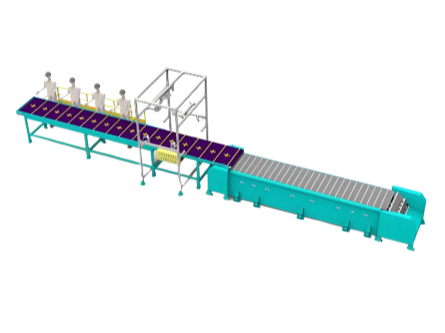
| E-commerce fulfillment | Mezzanine-to-dispatch sorting across 2-10 destination lanes for regional order waves |
| Express and courier hubs | Origin-destination diverging with integrated weight capture for billing |
| Third-party logistics | Multi-client parcel segregation where lane assignment changes by shift |
| Warehouse and cross-dock | Store-replenishment routing between picking levels and outbound doors |
What unites these sectors is the volume band: too large for manual sorting, too small for a 20,000-plus pieces-per-hour cross-belt loop.
Three forces support demand through the decade. Labor availability comes first, as hubs nearly everywhere struggle to staff night shifts. Order fragmentation comes second, with parcel counts per order rising while average size falls, multiplying divert decisions. Capital discipline comes third, as mid-market operators favour equipment that installs in weeks and finances in phases. Vendors publishing verified throughput and opening their control layer to standard fieldbuses are winning these tenders.
For an express depot handling roughly 30,000 parcels daily across 8 to 12 destinations, replacing manual wall sorting cuts headcount per shift while raising accuracy from a manual baseline in the low 90s to at least 99%. Fewer mis-sorts mean fewer redeliveries, service tickets, and SLA penalties. Two savings are often missed: integrated weighing retires a separate dimensioning station, and accurate weight data recovers revenue on under-declared parcels. Together they shorten payback by six to twelve months.
The Z-Type diverging sorting machine in 2026 is a mature, configurable answer to the mid-volume sorting problem. Its strengths are structural: a Z-path fitting constrained floor plans, two to ten lanes that scale with demand, measurement at the point of induction, and controls speaking the fieldbuses already on site. Buyers should weigh lane expandability, published accuracy on real parcel mixes, and protocol openness.
Sorter
Wechat QR code
wechat number:Copyright © 2022-2023 Winda, inc. All rights reserved