

For two decades, envelope sorting meant one thing: a national postal hub the size of an airport hangar. That first wave is mature. The second wave, now gathering pace in 2026, looks completely different - compact, intelligent sorting systems moving into bank processing centers, government service halls, and corporate mailrooms. The Intelligent Envelope Sorting System sits exactly in the gap between manual trays and hub-scale lines.
Postal operators have automated their hubs. The buyers driving current growth are institutions whose mail never touches a postal sorter at all: banks circulating cards and statements, permit offices routing applications, universities running campus mail, and corporate mailrooms. Their pain points differ from a national carrier's in three ways.
Volume is spiky, not flat. A mailroom idles on Monday morning and floods before a quarterly deadline. Manual staffing for peaks is brutal; hub-scale machinery is oversized.
Compliance replaces throughput as the headline. A mis-routed statement is a legal problem, not just a delay. These buyers pay for audit trails and verified accuracy rather than raw speed.
IT integration is mandatory. These mailrooms already run document-management systems. A sorter that cannot talk to them is dead on arrival - the integration layer, not the mechanics, decides most tenders.
The system's configurable throughput of 8,000 to 40,000 envelopes per hour is not a marketing range; it spans branch processing centers through regional service hubs. At the low end, a single operator clears an afternoon backlog. At the high end, feed teams clear a full day's intake before end of shift.
The adaptive feed handles 90 x 140 mm up to 350 x 250 mm items - DL, C5, and C4 envelopes plus flat mailers - resizing automatically between formats. That matters in mixed-stream mailrooms where a fee notice, a passport envelope, and an A4 flat arrive in the same tray.
Recognition runs a dual-head architecture: AI OCR plus barcode. Printed addresses resolve at 98%+ and handwritten ones at 85%+, with unreadable items routed to an exception station with photo capture. Accuracy holds at 99.7-99.9%, up from the 99.2% typical of manual benches, and every routing decision is logged.
| Specification | Value |
|---|---|
| Throughput / item size | 8,000 - 40,000 envelopes/hour; 90 x 140 - 350 x 250 mm (DL to C4) |
| Accuracy / recognition | 99.7 - 99.9%; AI OCR + barcode dual-head (98%+ printed, 85%+ handwritten) |
| Outlets / integration | Configurable 4 - 24 field-upgradeable outlets; RESTful API, SOAP/XML, SMTP/IMAP |
| Deployment / ROI | 3 - 5 days commissioning; 60 - 75% labor cut; 18 - 24 month payback |
The system exposes RESTful API and SOAP/XML interfaces alongside SMTP/IMAP hooks, with proven integrations to mainstream address and franking ecosystems including Pitney Bowes and Neopost platforms plus custom WMS deployments. In practice this changes what "installation" means.
In a hub project, integration is a months-long systems-engineering exercise. In a mailroom project, the sorter registers as a node in the existing workflow: intake scans publish routing events, exception items generate tickets, and daily counts flow into the document-management system without re-entry. Commissioning takes 3 to 5 days on-site rather than a quarter of change management.
Three contract clauses follow. First, request the API schema before purchase and test it against your workflow system in a sandbox. Second, require the event log export format in writing - it is the compliance evidence trail. Third, confirm exception-station behavior at factory acceptance: photo capture, review queue, and re-injection path.
The 4-to-24-outlet range is field-upgradeable without replacing the core system, and that reshapes procurement. Institutions rarely know their stable destination count in year one - departments reorganize, service points merge, mail categories get added. A sorter whose outlets are fixed at purchase forces a choice between chronic mis-sorting and premature replacement.
With the modular architecture, a bank processing center can start at 8 outlets for card and statement categories, then add outlets as volume categories are mapped - typically during maintenance windows rather than downtime projects.
Sizing guidance from deployments: count destination categories first (department, building, service class), add 30-40% headroom for reorganizations, then fix the outlet count. Buyers who invert this order end up batching manually at the last mile, quietly returning the labor cost the machine was meant to remove.
Hub-scale ROI models assume three shifts and national volume. Mailroom buyers should run a leaner model with three inputs:
Labor displacement. Manual bench sorting consumes the published 60-75% labor reduction directly: two full-time sorting roles collapse into one supervisory role with machine feeding. At typical fully loaded costs this alone funds the machine inside the 18-24 month payback window.
Throughput elasticity. The 3-5x manual capacity increase converts peak-day overtime into same-day clearance - the hidden line item that usually tips the model favorable.
Accuracy as risk reduction. Moving from 99.2% manual to 99.8% machine accuracy cuts mis-routed items roughly fourfold. For regulated mail, one avoided compliance incident can exceed the annual operating cost.
Operationally the system is modest: about 10 minutes of daily cleaning, weekly belt checks, monthly calibration, with IoT connectivity enabling predictive alerts.
The envelope-sorting market is bifurcating. Hub-side demand is consolidating around a few large modernization programs, while institutional demand fragments into thousands of mid-range purchases - exactly the profile this system class targets. Two developments will accelerate the split.
First, digital-mail programs in corporate and government estates are formalizing: intake is scanned at the mailroom, items are sorted and stored by machine, and metadata feeds document systems. That pipeline only works with an API-first sorter, which is pulling integration requirements into tenders earlier than vendors expected.
Second, handwritten-address recognition is closing the gap. As models push handwriting above the 85%+ baseline, the exception queue shrinks and single-operator deployment becomes realistic for smaller estates.
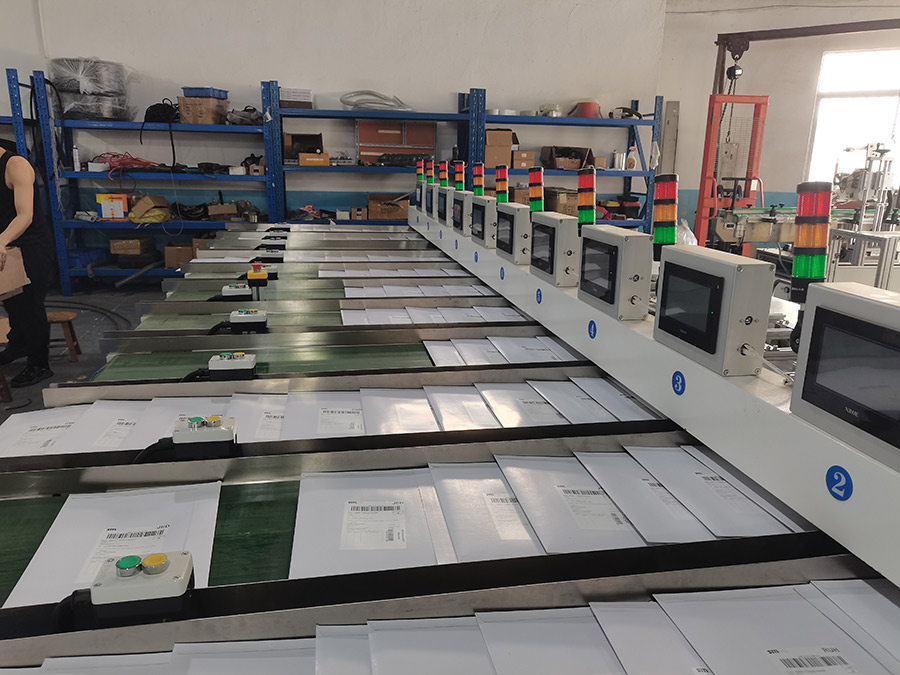
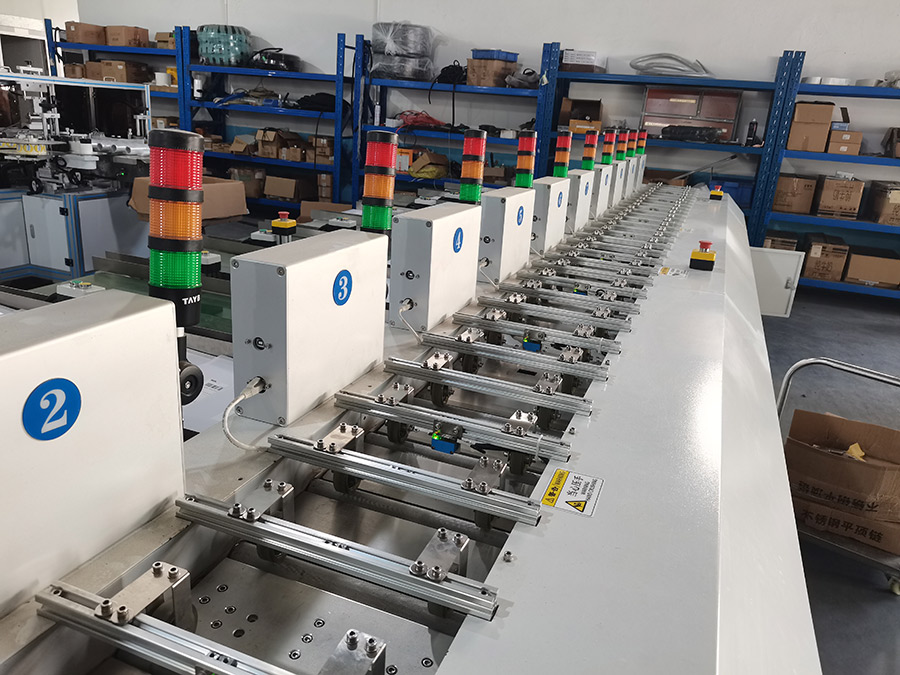
Start with three measurements: items per day at peak, destination categories, and current sorting staff hours. Against those numbers, the 8,000-40,000 envelopes-per-hour range, 99.7-99.9% accuracy, and RESTful integration of the Intelligent Envelope Sorting System resolve into a configuration and payback figure.
Related reading: our 2026 AI vision and IoT outlook covers this machine class, and exception-item economics explains how to price the unreadable-mail queue.
For a tailored configuration or factory-direct quotation, contact WINDA at info [at] zowinda [dot] com - we map the system to your mailroom profile within one business day.
Sorter
Wechat QR code
wechat number:Copyright © 2022-2023 Winda, inc. All rights reserved