
In the rapidly evolving landscape of industrial automation, Belt Turning Machines have emerged as a critical technology for optimizing material flow in smart factories. As we progress through 2026, these innovative systems are transforming how manufacturers design flexible production layouts, enabling unprecedented levels of efficiency and adaptability.
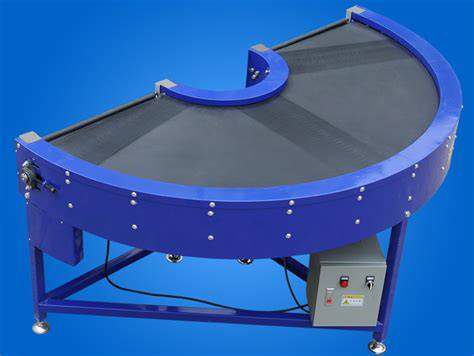
What is a Belt Turning Machine?

A Belt Turning Machine, also known as a curve conveyor or rotary conveyor, is a specialized material handling system that changes the direction of product flow without requiring products to stop or be manually reoriented. These machines use advanced belt technology to smoothly rotate items around corners, enabling continuous flow in compact factory layouts.
Unlike traditional conveyor systems that require sharp 90-degree turns with transfer mechanisms, belt turning machines maintain product orientation and speed throughout the turning process, making them ideal for delicate items and high-throughput operations.
Key Advantages of Belt Turning Machines in 2026
Space Optimization
Reduce floor space requirements by up to 40% compared to traditional conveyor configurations
Continuous Flow
Maintain uninterrupted material movement with zero downtime during direction changes
Gentle Handling
Protect fragile products with smooth, controlled rotation without shock or impact
Flexible Angles
Support turning angles from 30 to 180 degrees for any layout configuration
1. Multi-Angle Flexibility
Modern belt turning machines offer configurable turning angles ranging from 30 degrees to 180 degrees, allowing manufacturers to design production lines that fit unique spatial constraints. This flexibility is particularly valuable in urban facilities where floor space is at a premium.
Innovation Insight: The latest 2026 models feature motorized angle adjustment, allowing operators to change the turning angle on-the-fly through HMI control panels - a game-changer for multi-product manufacturing lines.
2. Continuous Flow Without Interruption
The ability to change direction without stopping is perhaps the most significant advantage of belt turning technology. In high-volume distribution centers, this translates to:
- Increased Throughput: Up to 30% higher processing capacity compared to systems with transfer points
- Reduced Wear: Fewer mechanical components mean lower maintenance costs and longer system lifespan
- Better Product Integrity: No jarring stops or starts that can damage sensitive goods
- Energy Efficiency: Smooth continuous operation consumes less power than start-stop mechanisms
Real-World Applications
| Industry Sector | Application Scenario | Key Benefits |
|---|---|---|
| E-commerce Fulfillment | Parcel sorting and routing between zones | High-speed sorting at 120+ items/min |
| Food & Beverage | Packaged product handling in processing plants | Hygienic design, easy sanitation |
| Pharmaceutical | Medicine packaging lines | Gentle handling, GMP compliant |
| Automotive Parts | Component supply to assembly stations | Just-in-time delivery support |
| Airport Logistics | Baggage handling systems | Reliable 24/7 operation |

Integration with Industry 4.0 Technologies
The convergence of belt turning machines with IoT sensors, AI-driven predictive maintenance, and cloud-based monitoring platforms has created a new paradigm for intelligent material handling. Real-time data analytics enable operators to optimize throughput, predict maintenance needs, and integrate seamlessly with warehouse management systems (WMS).
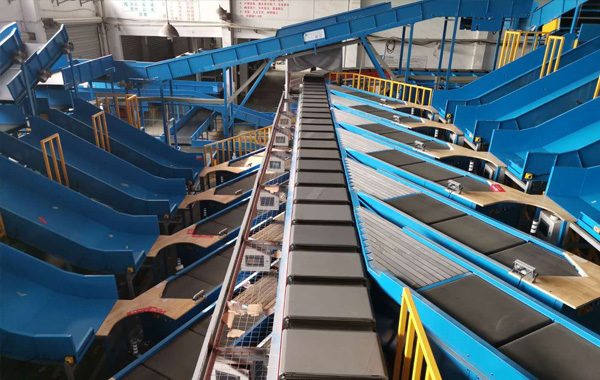
Leading manufacturers are now deploying belt turning machines equipped with embedded sensors that monitor belt tension, motor temperature, and bearing wear. This data feeds into machine learning algorithms that can predict failures weeks before they occur, reducing unplanned downtime by up to 65%.
| Technology Integration | Capability | Business Impact |
|---|---|---|
| IoT Sensor Network | Real-time condition monitoring | 65% reduction in unplanned downtime |
| AI Predictive Maintenance | Failure prediction & scheduling | 25% decrease in maintenance costs |
| Cloud WMS Connectivity | Centralized control & visibility | Improved inventory accuracy |
| Digital Twin Simulation | Virtual layout optimization | Faster system design cycles |
Future Trends: What to Expect Beyond 2026
Sustainability Focus: Next-generation belt turning machines will incorporate regenerative braking systems that capture energy during deceleration phases, potentially reducing overall power consumption by up to 20%. Biodegradable belt materials and recyclable frame components will also become standard offerings.
- Modular Design Systems: Quick-change belt modules for different product types within minutes instead of hours
- Autonomous Calibration: Self-adjusting tension and tracking systems using computer vision
- Collaborative Robot Integration: Seamless handoff zones between human workers, cobots, and conveyors
- Augmented Reality Maintenance: AR-guided repair procedures overlaid directly on equipment
Conclusion
Belt Turning Machines represent more than just a conveyor component - they embody the shift toward agile, space-efficient, and intelligent manufacturing. As factories continue to evolve toward fully integrated smart production environments, these versatile machines will remain at the heart of material flow innovation.
For organizations looking to modernize their material handling infrastructure, investing in advanced belt turning technology offers a compelling combination of operational efficiency, space optimization, and future-readiness. The question is no longer whether to adopt this technology, but how quickly it can be integrated into existing operations.
Contact Us Today for a Free ConsultationGet in Touch With Our Team
Email: [email protected]
WhatsApp: +86 186 2085 0485
Website: www.wdsort.com