2026 Global Intelligent Logistics Sorting System Development Trends and Market Analysis2026 Global Intelligent Logistics Sorting System Development Trends and Market Analysis
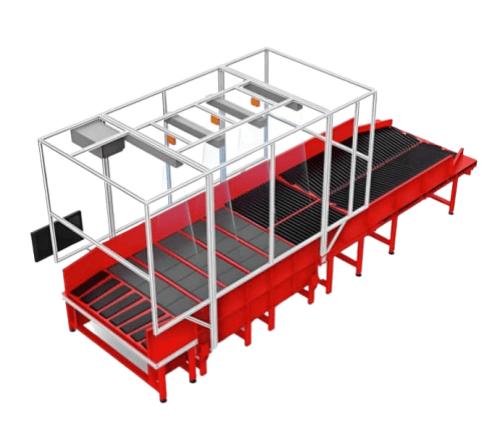
Market Overview and Growth Projections
The global intelligent logistics sorting system market is experiencing unprecedented growth in 2026, driven by the exponential increase in e-commerce volumes, rising labor costs, and the urgent need for supply chain optimization. According to latest industry reports, the market size is expected to reach $8.5 billion by the end of 2026, representing a compound annual growth rate (CAGR) of 14.2% from 2023 to 2026.
Key factors driving this growth include:
- E-commerce Boom: Global e-commerce sales exceeded $6.5 trillion in 2025, creating massive demand for automated sorting solutions
- Labor Shortage: Rising wages and shortage of skilled workers in logistics sectors worldwide
- Technology Maturation: AI, machine vision, and IoT technologies becoming more affordable and reliable
- Sustainability Requirements: Green logistics initiatives pushing for energy-efficient automated solutions
Key Technology Trends in 2026
1. AI-Powered Visual Recognition Systems
Artificial Intelligence and deep learning technologies have revolutionized package recognition accuracy. Modern systems achieve 99.5% recognition rates for various package types, including irregular shapes, damaged labels, and multiple barcodes. Leading manufacturers are integrating:
- Real-time object detection using YOLO v8 and newer architectures
- 3D vision systems for dimension and volume measurement
- Adaptive learning algorithms that improve with each sorted package
- Multi-spectral imaging for reading damaged or obscured barcodes
2. Modular and Scalable System Designs
The trend toward modular design allows logistics operators to start with smaller systems and expand as needed. Key advantages include:
- Plug-and-play modules that can be added without system shutdown
- Standardized interfaces for easy integration with existing warehouse management systems (WMS)
- Flexible configuration options for different throughput requirements (1,000 to 20,000 parcels/hour)
- Reduced installation time from weeks to days
3. Energy Efficiency and Sustainability
With increasing focus on environmental impact, 2026 has seen significant advancements in energy-efficient sorting technologies:
- Regenerative braking systems that recover energy during deceleration
- Smart power management that adjusts energy consumption based on real-time workload
- Use of lightweight materials reducing overall system weight by 25-30%
- Solar panel integration for auxiliary power in large distribution centers
Regional Market Analysis
Asia-Pacific Region
The Asia-Pacific region continues to dominate the intelligent sorting system market, accounting for 48% of global demand in 2026. China remains the largest market, driven by:
- Massive domestic e-commerce market (Alibaba, JD.com, Pinduoduo)
- Government initiatives like "Smart Logistics 2025"
- Rapid adoption of automation in manufacturing and retail sectors
- Strong local manufacturing base reducing equipment costs
North America and Europe
These mature markets are focusing on system upgrades and retrofitting existing facilities. Key trends include:
- Replacement of legacy systems with AI-enabled solutions
- Integration of robotics and autonomous mobile robots (AMRs)
- Focus on last-mile delivery optimization
- Stringent labor regulations driving automation adoption
Application Sectors and Use Cases
E-commerce and Parcel Delivery
The e-commerce sector accounts for 52% of intelligent sorting system deployments in 2026. Typical applications include:
- Cross-belt sorters: Handling 10,000-20,000 parcels/hour with 99.9% accuracy
- Tilt-tray sorters: Gentle handling for fragile items and irregular packages
- Pop-up wheel sorters: Cost-effective solution for medium-volume operations
- Shoe sorters: High-speed sorting for small parcels and envelopes
Postal and Courier Services
National postal services and courier companies are major adopters, with systems processing:
- Letters and flats at speeds up to 40,000 pieces/hour
- Parcels with automatic dimension and weight capture
- International mail with automated customs documentation
- Returns processing with automated routing
Retail and Fashion
The retail sector, particularly fashion and apparel, is increasingly adopting automated sorting for:
- Order fulfillment and distribution
- Store replenishment and allocation
- Returns processing and quality inspection
- Seasonal inventory management
Food and Beverage
Specialized sorting systems for the food industry feature:
- Hygienic design with easy-to-clean surfaces
- Temperature-controlled environments for perishable goods
- Gentle handling to prevent product damage
- Traceability and batch tracking capabilities
Future Outlook and Opportunities
Looking ahead to 2027 and beyond, several emerging trends will shape the industry:
- Digital Twin Technology: Virtual modeling of sorting systems for optimization and predictive maintenance
- 5G Connectivity: Ultra-low latency communication enabling real-time control and monitoring
- Edge Computing: Distributed processing reducing reliance on central servers
- Collaborative Robots (Cobots): Human-robot collaboration for flexible sorting operations
- Blockchain Integration: Enhanced supply chain transparency and traceability
Conclusion
The intelligent logistics sorting system market in 2026 represents a dynamic and rapidly evolving industry at the intersection of artificial intelligence, robotics, and supply chain management. As e-commerce continues to grow and labor challenges persist, the adoption of automated sorting solutions will only accelerate.
For businesses considering investment in sorting automation, key recommendations include:
- Conduct thorough ROI analysis considering both capital and operational costs
- Prioritize systems with open architectures and standard interfaces
- Consider scalability and future expansion requirements
- Evaluate vendor support capabilities and local service presence
- Plan for integration with existing IT infrastructure and workflows
About the Author: This article is written by industry experts with extensive experience in logistics automation and intelligent sorting system implementation. For more information about our sorting solutions and case studies, please contact our technical team.