

Envelope bags have quietly become the fastest-growing parcel format in e-commerce and postal networks: lightweight, flat, cheap to ship, and perfect for small items. Yet the machine that fills them is often an afterthought. In 2026, operators are flipping that logic and judging filling equipment the way CFOs judge any asset: by the cost of every single bag it produces. This outlook examines where the Envelope Bag Filling Machine WDA-DP-600 fits into that shift, and which specifications move the profit line.
Across 2026 planning cycles, one pattern repeats: parcel volume is growing fastest in the 10 g to 2,000 g range. Cosmetics, spices, supplements, SIM cards, spare parts, and documents all ship in padded envelopes or poly mailers. General-purpose parcel sorters handle these items poorly because they are optimized for rigid cartons, while manual filling lines cannot keep up with order profiles that peak unpredictably during promotions.
The result is a dedicated small-format equipment class: machines that open, dose, fill, and seal envelope bags as a single continuous flow. The WDA-DP-600 sits in this category, filling 40 to 60 bags per minute across a bag window of 80 to 250 mm width and 120 to 350 mm length. One operator can therefore oversee a line that would otherwise require four to six packing stations.
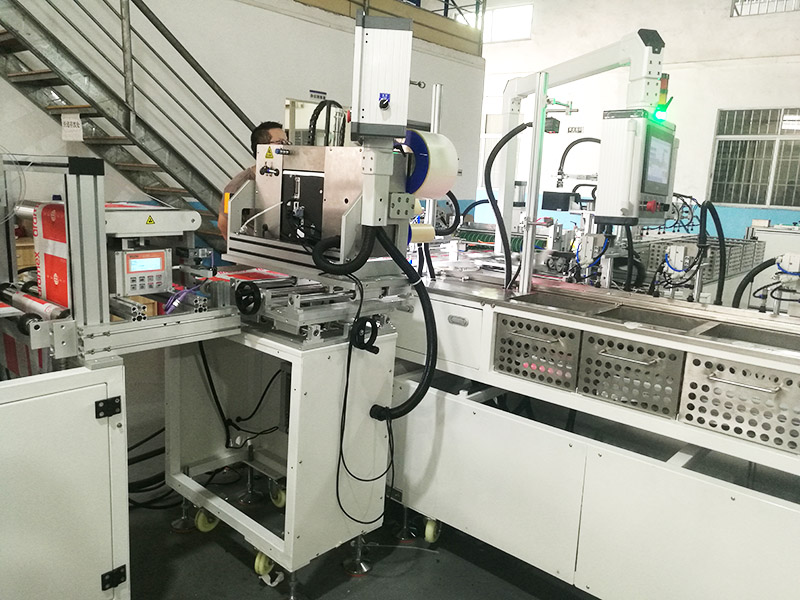
Envelope bag filling lines combine dosing, filling, and sealing in one continuous flow.
For years, buyers compared filling machines almost entirely on speed. In 2026 the conversation has matured into cost per filled bag, which folds together four inputs:
When procurement teams model these four inputs over a five-year horizon, the machine with the highest headline speed rarely wins. The winner is usually the one with the tightest dosing tolerance and the simplest changeover, because those two parameters compound daily.
Consider a product dosed at 100 g. At ±0.5 percent accuracy, worst-case give-away is 0.5 g per bag. At 40 bags per minute, two shifts per day, and 250 working days, that is roughly 9,600 kg of product per year either protected or lost, depending on the tolerance class of the filling system. For food, nutraceutical, and chemical products, dosing accuracy is therefore not a technical nicety; it is one of the largest controllable cost positions in the fulfillment chain.
This is why 2026 specifications increasingly lead with gravimetric feedback: the weighing system closes the loop on every bag instead of trusting a calibrated auger or cup. The WDA-DP-600 covers 10 g to 2,000 g (customizable), so one machine serves multiple product lines without hardware swaps.
Regulators are paying more attention to net-content declarations in small-format packaging. Food and pharmaceutical brands face audits where systematic under-fill triggers recalls and over-fill triggers margin questions. Machines with documented weighing accuracy, traceable calibration, and PLC-based batch records are becoming the default procurement requirement in the EU, GCC, and North America.
The practical checklist has grown accordingly: request the weighing accuracy statement in writing, ask how calibration is logged on the touchscreen HMI, and confirm that batch data can be exported. A machine that only counts bags but cannot prove weights is a compliance liability.
Envelope bag lines rarely run one SKU. The bag window of 80 to 250 mm by 120 to 350 mm on the WDA-DP-600 is only valuable if switching between formats does not consume the afternoon. Modern machines address this in three ways:
A useful 2026 benchmark: a trained operator should complete a documented changeover between two common bag formats in under 15 minutes. Anything above 30 minutes usually signals a design from an earlier era, and it silently erodes OEE on multi-SKU lines.
Envelope bag filling machines do not operate in isolation. Downstream, filled bags still need to be counted, trayed, and sorted. Many operators pair the filler with upstream singulation and downstream sorting: the express envelope sorting machine WDA-ES-5000 takes filled bags into grading channels, while data from both machines flows into the same WMS. The earlier article on smart weighing and vision for envelope bag filling covers the sensor layer; this outlook focuses on the economic layer.
The architectural principle for 2026 is simple: every machine that touches the bag should either add data or add speed. Filling adds weight data; sorting adds destination data. Between them, a small-format line can produce a complete digital record of every envelope without manual scanning.
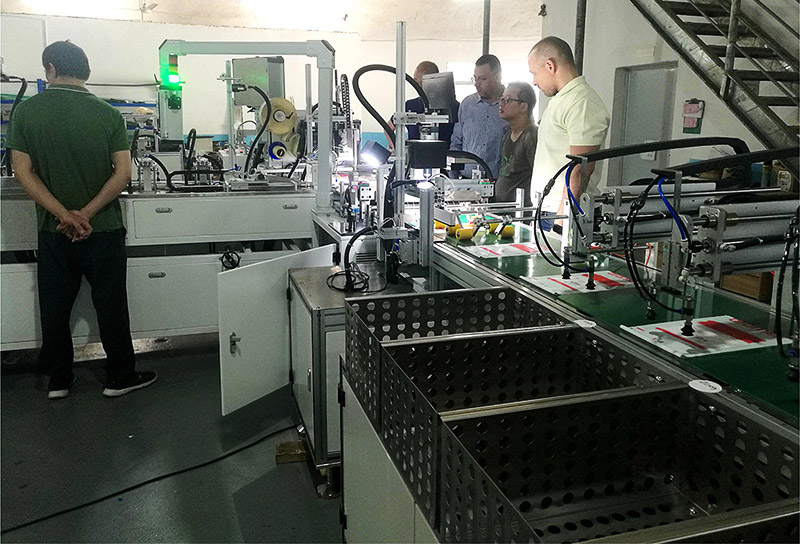
PLC and touchscreen HMI control keep recipes, calibration, and batch data in one place.
| Parameter | Specification |
|---|---|
| Filling capacity | 40 to 60 bags per minute |
| Weighing accuracy | ±0.5 percent or better |
| Bag size range | Width 80 to 250 mm, length 120 to 350 mm |
| Filling weight range | 10 g to 2,000 g, customizable |
| Power supply | 220 V / 50 Hz, customizable |
| Power consumption | 1.5 to 3.0 kW |
| Air pressure | 0.5 to 0.7 MPa |
| Dimensions | 2,000 x 1,200 x 1,600 mm, customizable |
| Weight | Approximately 450 kg |
| Control system | PLC with touchscreen HMI |
Three requests separate serious suppliers from the rest. First, a documented dosing tolerance across the full 10 g to 2,000 g range, not just at one nominal weight. Second, a changeover demonstration on your own bag formats during factory acceptance. Third, an energy and air-consumption profile at your real production rate, so cost per bag can be modeled before the purchase order.
With lead times of six to ten weeks for customized configurations, the planning window for Q2 2026 capacity is already open. Operators who treat the envelope bag filler as a profit center rather than a packing accessory are setting the benchmarks the rest of the market will chase.
WINDA builds envelope bag filling and sorting systems for e-commerce, postal, food, and pharmaceutical applications. Send us your bag formats, target weights, and daily volumes, and we will return a cost-per-bag model plus a machine configuration proposal.
Email: info [at] zowinda [dot] com | WhatsApp: +86 186 2085 0485
Product page: Envelope Bag Filling Machine WDA-DP-600
Sorter
Wechat QR code
wechat number:Copyright © 2022-2023 Winda, inc. All rights reserved