

Most card sorting projects open with the wrong question: how fast is it? On a bureau floor, throughput is set less by transport speed than by how many destinations you can hold open at once. That is why the choice between 20 and 40 outputs quietly decides staffing, exception rates and profit per job.
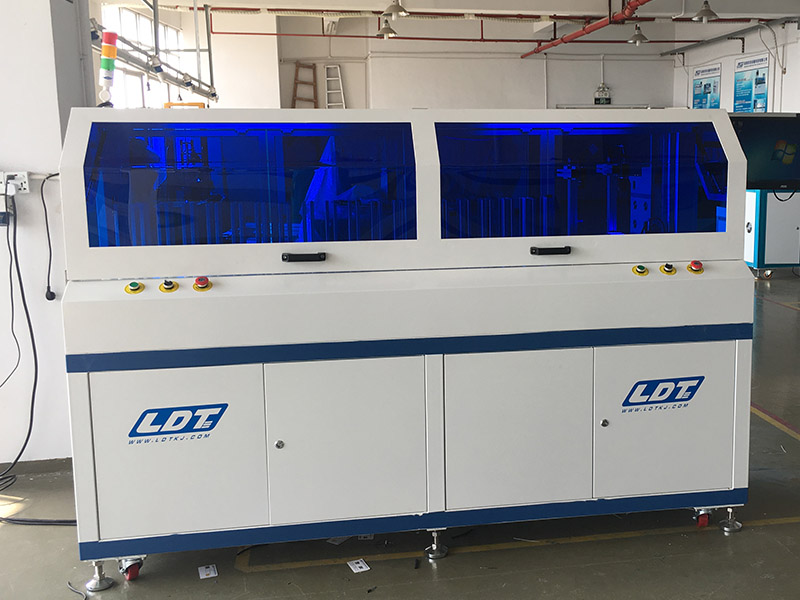
Assigning a pocket is a commitment: everything in that stack shares one property - a BIN range, a branch code, a delivery zone or a single cardholder. Pocket count is therefore the number of promises you can keep open during one pass. Belts, cameras and readers exist only to feed those promises correctly.
That reframing matters because pocket count behaves like a labour variable, not a hardware accessory. Too few pockets forces mid-batch clears so a new destination can open. Every clear is a manual touch, and every manual touch is a chance to misfile or lose sequence. For reference, this platform takes 50 x 50 mm to 250 x 350 mm stock at 0.1 to 2.0 mm thickness, sorts up to 20,000 cards per hour and reads OCR plus 1D/2D barcode above 99.9 percent accuracy.
Posted capacity assumes one destination and perfect reads. Real jobs are multi-destination, so effective capacity discounts for pockets that fill early, pocket changes and exceptions. The same transport looks very different under three common profiles.
| Job profile | Destinations | Effective rate | Limiting factor |
|---|---|---|---|
| Bulk triage, few destinations | 2 to 4 | 16,000 to 18,500/h | Feeder discipline, stacker swaps |
| Branch or BIN split | 12 to 18 | 11,000 to 14,000/h | End-of-run pocket clears |
| Multi-product issuance | 25 to 45 | 7,500 to 10,500/h | Pocket starvation, changeover |
Two machines with identical nameplate speed can differ by 40 percent in real output purely because one has 40 pockets. The extra magazines did not speed up the transport; they removed the clears that were stealing time. At 400,000 cards a month that gap is a full shift per week - more than the cost of the added outputs.
Bureaux sell sequence integrity. Insurance cards and transit passes ship in cardholder order because the receiving system assumes it, and one misfiled card breaks that assumption with a manual, hard-to-audit recovery. Accuracy above 99.9 percent sounds safe until applied to volume: at 15,000 cards an hour it is roughly 15 cards per hour, about 120 per shift, landing somewhere unintended.
Pockets are the first defence, because a rejected item needs somewhere to go that is not a customer stack. Practical layouts reserve two to four pockets for exceptions - unreadable, damaged, thickness-rejected, duplicate-suspect. Machines sized exactly at their production destinations have no clean place for a problem card, so operators improvise, and improvisation is where purity dies.
Mixed stock is rarely uniform: some pieces carry clean 1D codes, some 2D, some only human-readable numbers, and a few arrive scuffed. A competent machine resolves these in tiers instead of counting every miss as failure.
Two design consequences follow: the layout needs at least two pockets of headroom, and every rejection must be logged with its image rather than a counter increment. A bureau that cannot show a client why one card was rejected ends up re-running the batch to prove diligence.
Weeks mix reprints, campaign batches and rush replacements. Three questions settle changeover before purchase: can the recipe load from the host without touching the HMI, are pocket assignments re-mappable in software, and how long does a two-person clear-and-restart take? A machine answering "software-defined, relabel-free, under four minutes" absorbs ten small jobs a day. One needing a physical remap pushes small jobs onto a manual bench, where margins are thin.
Plan 1.2 metres of clear access on the pocket face so operators never lean across a running transport, and keep the feeder side free for trolley staging. Power is modest on the standard 220V single-phase platform, but confirm inrush and whether a dedicated circuit is needed. Paper and PVC dust settles on optics, so a sorter beside a guillotine needs a far shorter cleaning interval than one in a filtered room - get that interval in writing at your dust level.
| Failure | Symptom | Cost |
|---|---|---|
| Double feed | Two cards in one decision | Batch re-run, manual shard audit |
| Pocket overflow | Stack backs into transport | 5 to 15 minutes, damaged cards |
| Misread routing | Card in wrong customer stack | Audit, escalation, reissue |
| Recipe error | Whole batch to one pocket | Total re-run, the worst case |
Only the first two are mechanical. The others are configuration and integration failures, which is why the WCS audit trail matters as much as the hardware: a sorter reporting "batch complete" without per-pocket counts and per-item decisions gives you no way to catch a recipe error before cards ship.
Run it on your own stock, not the vendor's demo deck:
Choose 20 when work concentrates on few destinations, batches clear often and floor space is tight. Choose 40 when a real share of jobs exceeds 15 destinations, when customers demand auditable sequence integrity, or when the pocket ceiling arrives within two years. "20 now, expandable later" is only honest if the vendor confirms frame, wiring and licence actually support it - an upgrade that needs a new chassis is a sales story, not a plan.
Unsure which side you sit on? Count destinations per job for one month of production. That column of data settles the argument better than any brochure. For context, see our notes on card sorting machine trends and card punching yield economics.
Send monthly volume, destinations per job and card stock mix, and we will return a recommended configuration plus an honest answer on whether 20 outputs is enough. Specifications are on the Card Sorting Machine (20/40 Outputs) product page.
Email: info [at] zowinda [dot] com | WhatsApp: +86 186 2085 0485
Sorter
Wechat QR code
wechat number:Copyright © 2022-2023 Winda, inc. All rights reserved