

Sortation projects are justified by throughput and killed by exceptions. A sorter rated at 16,000 pieces per hour does not lose that capacity because the wheels are slow - it loses it because one unreadable label stops the line while an operator walks over to look at a box. What separates a working installation from a showcase is not headline speed. It is what happens to the item nobody can read.
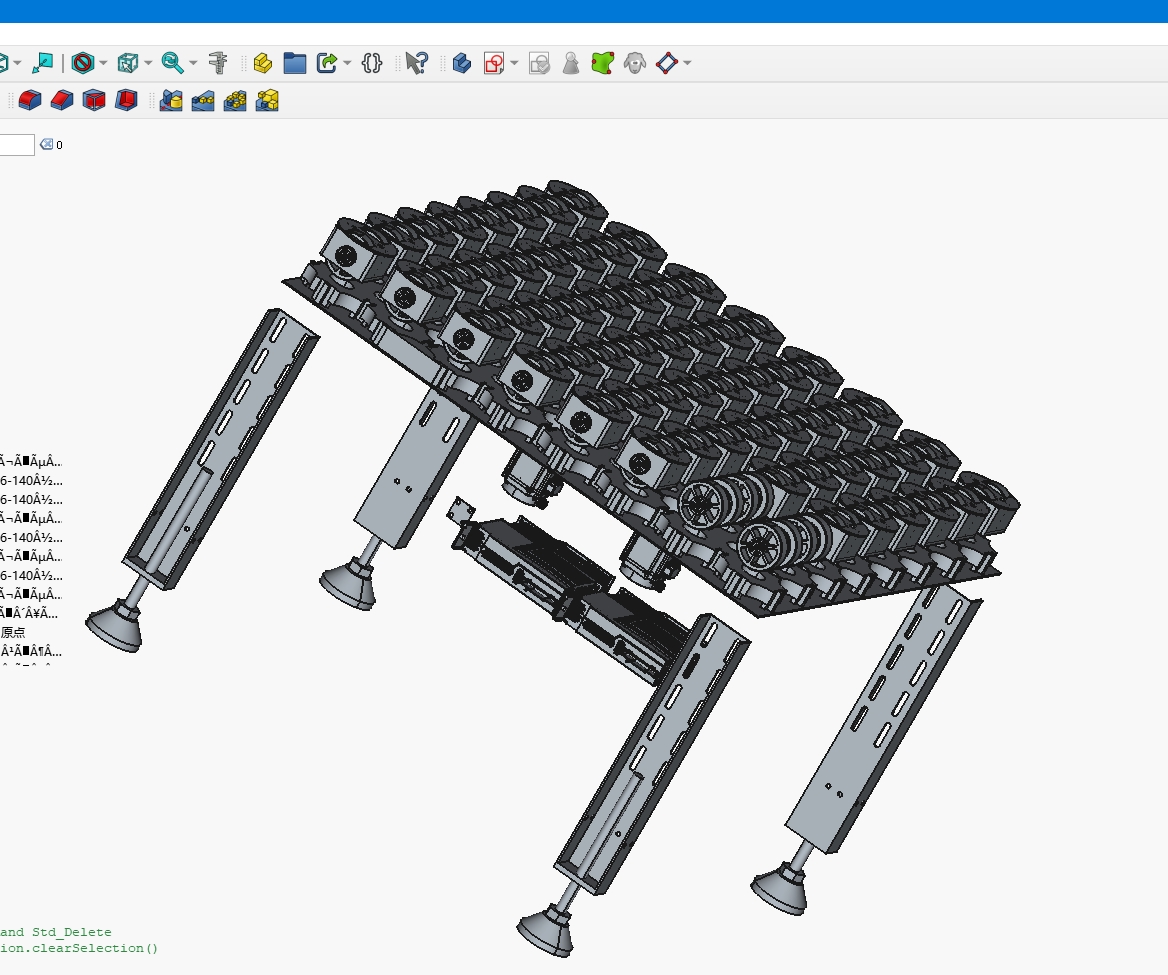
The WINDA High-Efficiency Swivel Wheel Sorter is built around that reality: eight primary stations labelled A through H, plus a dedicated NG (No Good) station that captures unreadable, oversized or non-conveyable items automatically without interrupting the main flow. Rated up to 16,000 pieces per hour at 99.95% accuracy.
Buyers compare sorters on pieces per hour. In practice the real constraint is destinations. A six-station machine sending to six zones must recirculate every parcel for a seventh - and that manual step removes the labour saving the project was approved for. Eight stations add two outlets, roughly 33% more destination zones without extra floor space per station. For a hub serving eight delivery areas, that is the difference between a single-pass sort and a nightly correction shift.
Station count is also no longer permanent: the frame is modular, and moving from six to eight stations in the field takes one to two days with minimal downtime.
| Parameter | High-Efficiency Swivel Wheel Sorter (8-station) |
|---|---|
| Sorting stations | 8 stations (A, B, C, D, E, F, G, H) + 1 NG exception station |
| Throughput capacity | Up to 16,000 pieces per hour |
| Item size range | 100 x 100 mm up to 550 x 550 mm |
| Sorting accuracy | 99.95% and above |
| Recognition technology | Barcode / QR standard; OCR optional |
| Conveyor speed | 0.8 - 2.0 m/s, adjustable |
| Divert mechanism | Servo-driven swivel wheel, contact-nudge |
| Station expansion | Field upgrade 6 to 8 stations, 1-2 days |
An NG station sounds like a detail. It is the difference between a line that keeps running and one that stops. A parcel with a scuffed label arrives, the scanner returns nothing, the WCS has no destination. Without an NG lane it circulates until someone intervenes, or blocks the divert. With one, it is diverted like a good parcel and the flow continues at full rate.
Batching is the under-appreciated part. Exceptions arriving one at a time cost far more than the same exceptions reviewed together, because each forces an operator to break away from induction. One lane turns that distraction into a scheduled task and makes the exception rate measurable.
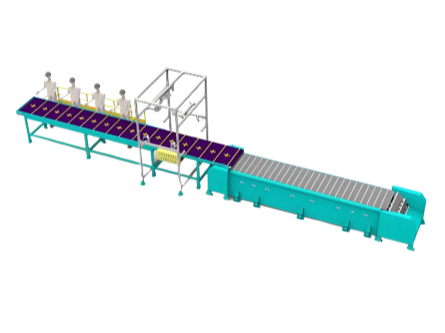
There is no universal winner; the choice follows item mix and destination count. A cross-belt sorter wins on absolute throughput, a narrow-belt sorter suits flat mail. Swivel wheel sits in the middle: gentler than a pusher, cheaper and more compact than cross-belt, tolerant of bags and irregular cartons.
Budgets have shifted from speed to resilience. After peak seasons in which lines failed on exceptions rather than volume, buyers now write exception handling into tenders as a scored requirement. An NG station used to be an option line; it is often mandatory.
Right-sizing replaced maximising, and uptime is now measured. A 40,000 piece machine only pays at continuous full load, so operators buy capacity in increments and log every NG event with a reason code.
Three effects carry the business case. Labour falls as induction, divert and exception review replace manual sorting. Mis-sorts collapse, removing both re-delivery cost and the service contact behind it. Throughput per operator rises several-fold where night shifts are hardest to staff - and the NG lane protects all of it by keeping the line running through exceptions.
| Indicator | Typical outcome |
|---|---|
| Labour savings vs manual sorting | 65 - 75% |
| Reduction in mis-sorts | 99% fewer |
| Throughput vs manual operation | Approximately 6x |
| Payback period | 18 - 24 months |
Two notes keep the payback intact: review station assignment quarterly, since a station tied to a low-volume zone is capacity paid for and not used; and read the NG reason codes monthly, because a rising OCR failure rate is usually a scanner window or label issue that is cheaper to fix at source than to staff around. WINDA (Shenzhen, China) builds this machine for factory-direct delivery with commissioning, training and station tuning included. Hubs weighing a modular rotary wheel unit against a full eight-station line should ask not which is faster, but which destination map they expect to be running in three years.
Two additional outlets, allowing up to 33% more destination zones without reconfiguration, with the same throughput and accuracy ratings plus the dedicated NG station.
Yes. The modular frame accepts two additional stations in the field, typically in one to two days with minimal production downtime.
They are diverted automatically to the NG station for batch review while the main flow continues at full rate, logged with a reason code and item image.
Send your destination map, peak volume and item mix, and WINDA's engineers will specify the station count and NG strategy that fits - with a field-upgrade path if your network is still growing.
Email: info@wdsort.com | WhatsApp: +86 186 2085 0485
Product page: High-Efficiency Swivel Wheel Sorter, 8 stations | Full range: parcel sorter category.
Sorter
Wechat QR code
wechat number:Copyright © 2022-2023 Winda, inc. All rights reserved