

Sorting quotations compare easily on paper, poorly on a live floor. Two machines advertise similar hourly rates, yet one clears a night shift while the other spends it clearing jams. The Automated Parcel Sorter Xstream WDA-XS-24000 is rated at up to 24,000 parcels per hour and 99.9% accuracy; the useful 2026 question is how much of that survives poly bags, mixed cartons, full bins and a brownfield layout.
A nameplate rate assumes ideal feed, readable labels, empty destinations and no upstream starvation. A distribution center offers inconsistent induction gaps, damaged barcodes, recycled packaging and bins that fill at different rates. That gap is where procurement risk lives.
For the Xstream class, 24,000 parcels per hour is a ceiling under stable conditions, not a shift average. Achievable rates are set by three constraints: how reliably parcels stay on the shoe-and-slat surface, how quickly a full bin is detected and swapped, and how often reading needs a retry. Software and reporting are secondary to those three.
Buyers who write the ceiling into a contract without defining feed and bin conditions end up measuring the wrong thing. Specify a measured sustained rate over a defined window, with the test parcel mix attached as an exhibit. That single change protects the business case more than any vendor benchmark.
The Xstream uses shoes and slats optimized for consistent anti-jam sorting across difficult-to-automate parcels. That matters more than headline speed: a jam is not a lost second but a stop, a walk to the fault, a manual clear and a restart ripple that propagates upstream into induction.
At 20,000 parcels per hour, one clear taking ninety seconds erases roughly 500 parcels of nominal capacity. Three per hour remove about 7.5% of the ceiling before other losses are counted. A surface that keeps poly bags and irregular shapes tracked recovers that capacity without adding a single motor.
Evaluate anti-jam as a maintainability specification: clears per shift, access point, whether the machine detects the fault or an operator hears it, and restart time. Ask for mean clears per shift during factory acceptance rather than a generic reliability claim.
Multiple cameras read most 1D, 2D and postal barcodes regardless of which face is up. On a mixed parcel stream that recovers capacity in three ways.
It removes the re-orientation station and the extra conveyor it consumes. It cuts no-read retries that divert parcels into manual encoding at the worst moment - peak volume. And it makes inbound and outbound symmetrical, so one sorter serves both flows without a second reading rig.
The acceptance item is a first-read rate by parcel type - cartons, poly bags, flats and irregular pieces recorded separately. Aggregate read rates hide the weak category, often the fastest-growing one.
| Parameter | Specification |
|---|---|
| Model | WDA-XS-24000 Series |
| Rated throughput | Up to 24,000 parcels / hour |
| Sorting accuracy | 99.9% |
| Reading | Multi-sided 1D, 2D and postal barcodes |
| Length / width | 101-610 mm / 101-508 mm (larger optional) |
| Height / weight | 5-457 mm / 23 g - 27.2 kg |
| Destinations | Tubs, sacks and gaylords with full-bin sensors |
| Software | Web-based interface, secure API integration |
Every destination on the Xstream carries a sensor that signals when a bin is full and ready to be swapped. It sounds like a convenience feature; operationally it is a labor model. Without full-bin detection, an operator patrols a fixed route checking containers that may not need it, and a missed bin eventually becomes a spill or a forced stop.
Sensor-driven dispatch sends labor only where a change is due, turning a continuous patrol into an exception queue - the same shift from routine attention to measurement described in singulation and separation economics.
Specify what happens at the moment of fullness: pause the lane, divert to an overflow destination, or continue at risk of mis-sort. All three are defensible designs, but the chosen behavior must be written down because it determines achievable rate under mixed destination volumes.
Few buyers have a greenfield building. Compact, scalable design and flexible configuration options let the Xstream fit facilities with limited floor space and integrate with existing conveying. That matters because project cost includes conveyors, guards, power and controls work around the machine - often a larger line item than the sorter.
Modularity also changes expansion. Instead of replacing a line when volume grows, operators add a section and rebalance destinations. A 3PL can add peak-season capacity against a seasonal contract rather than justify a permanent step change.
The 2026 direction is toward right-sized automation: fewer mega-lines, more modular cells duplicated across sites. That is the same logic behind linear cross-belt selection, and it rewards suppliers who document footprint and interfaces early.
| Metric | How to measure |
|---|---|
| Sustained rate | Defined window, agreed parcel mix |
| First-read rate | By carton, poly bag, flat, irregular |
| Mis-sort rate | Audited against destination manifest |
| Clear frequency | Jam events per shift, time to restore |
| Bin behavior | Documented full-sensor trigger response |
| Integration | API and conveyor handoff with site WCS |
Three forces are shaping parcel sorting this year. Labor availability keeps pushing facilities toward automation that does not need a specialist to run. Parcel profiles keep diversifying as marketplace, direct-to-consumer and return flows converge on one line. And buyers increasingly demand measurable service levels instead of brochure figures.
For the Xstream class those forces play to the design: broad compatibility across plastic, poly bags, boxes, flats and irregular pieces; web-based software operators learn quickly; and secure API integration into an existing control stack. The machines that win evaluations will not have the largest datasheet number but numbers reproducible on the buyer's own floor.
That shift rewards suppliers willing to publish test conditions. A claim of 24,000 parcels per hour at 99.9% accuracy is a useful starting point; a witnessed run with the customer's parcel mix is the argument that closes the order.
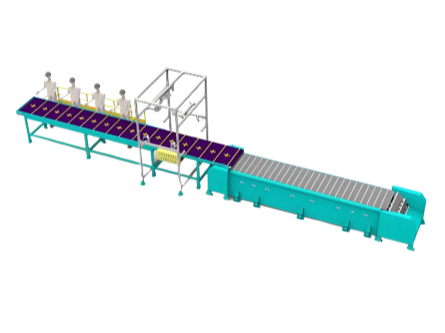

The fastest way to evaluate an Xstream line is a witnessed run with your own parcel mix, recording sustained rate, first-read rate, mis-sorts and clear frequency together. Against those four figures, the 24,000 parcels per hour ceiling and 99.9% sorting accuracy become a defensible business case rather than a comparison chart.
Related reading: our 2026 automated parcel sorter outlook covers the technology trends behind this platform, and our dock conveyor economics guide covers the upstream interface.
For a footprint review, a sample-run slot or a factory-direct quotation, contact WINDA at info [at] zowinda [dot] com - we will map the WDA-XS-24000 to your destination count and parcel profile within one business day.
Sorter
Wechat QR code
wechat number:Copyright © 2022-2023 Winda, inc. All rights reserved