

A narrow-belt sorter is usually bought on its headline rate, but the number that shapes the invoice and the operating cost is the count of discharge chutes. The High-Speed Linear Narrow-Belt Sorting Machine handles 10,000-15,000 parcels per hour at belt speeds up to 2.5 m/s, with accuracy above 99.95 percent and a configurable 30 to 200 chutes. It accepts parcels from 50x50x10 mm to 400x600x300 mm at 0.03 to 15 kg. This article examines how to choose the chute count that fits a real parcel mix rather than a brochure maximum.
Every chute is a destination. Too few and parcels aimed at the same lane queue up at the discharge point, forcing recirculation or a second manual sort downstream. Too many and the machine is longer, more expensive and carries empty lanes that never fill. The customizable 30-200 range exists precisely because no single number suits every fulfilment centre, postal site or retail distribution operation.
The useful question is not how many chutes the frame can hold, but how many distinct destinations need first-pass delivery at peak. A site shipping to eight carrier services and twenty regions may need fewer chutes than one running a hundred store replenishment lanes. Map destinations, then map volume per destination, before writing a specification. This is the same right-sizing logic discussed in lane granularity decisions.
| Operation | Typical need | Chute-count driver |
|---|---|---|
| E-commerce fulfilment | Moderate count, high volume per lane | Carrier and zone split |
| Postal and parcel | High count, wide destination set | Route and postcode grouping |
| Retail replenishment | High count, lower volume per lane | Store-level sorting |
| Third-party logistics | Reconfigurable mid-range | Multiple clients, mixed SKUs |
At 10,000-15,000 parcels per hour, a single busy chute can become a bottleneck even when the belt itself is running below its 2.5 m/s limit. Contention occurs when arrivals for one destination exceed that chute's discharge rate. The result is missed discharge windows, recirculation and a quiet loss of first-pass accuracy that looks like a sorting error but is really a capacity problem at one lane.
Read accuracy figures carefully. Accuracy above 99.95 percent with over 99 percent recognition describes the machine's decision and discharge logic under design conditions; it does not guarantee that every destination can absorb its share at peak. Ask the supplier to model your destination histogram against the proposed chute layout, and to show where the first contention point appears as volume grows.
A linear narrow-belt layout grows in a straight line as chutes are added. That is easier to fit into a narrow building than a loop, but it means the 30-chute and 200-chute versions are very different machines in length and civil works. Floor space, ceiling height, conveyor handoff positions and operator walkways all scale with the chosen count.
Brownfield sites should measure the available straight wall before specifying chutes. A shorter frame with fewer, well-chosen destinations often beats a long frame with empty lanes simply because it fits without relocating other equipment. The same footprint discipline appears in dock and layout economics and in nameplate versus real throughput.
Because chutes are customizable, a sensible strategy is to buy for today's destination set with a defined expansion path. An operation launching with twenty lanes can specify a frame that accepts more later, avoiding a full replacement when a new client or region is added. The question to put in the contract is how a chute is added: days of work, whether the belt frame is reopened, and whether the control software needs reconfiguration.
This modular approach is increasingly the norm in 2026. Buyers are asked to justify automation with measured operating cost, so an expandable mid-range machine with a clear upgrade path is often easier to approve than a maximum-count machine whose empty lanes are paid for from day one.
| Metric | How to measure | What it proves |
|---|---|---|
| Per-chute contention | Peak-hour arrivals vs discharge rate | No single lane caps the line |
| Recirculation rate | Count repeats on a full soak | Real first-pass performance |
| Sustained throughput | Best two hours of a 72-hour run | Repeatable, not peak-only, rate |
| Misroutes per 10,000 | Full-run count, not a sample | Accuracy holds under load |
The machine runs on PLC plus WCS control on Windows or Linux with 380V/50Hz power, customizable for site requirements. That integration matters because per-chute counts, recirculation and fault events become data rather than anecdotes. When a lane is consistently busy, the WCS shows it; when a destination's volume shifts seasonally, the layout can be reviewed against real numbers.
In practice this turns chute planning from a one-time guess into a continuous process. A line that records where parcels actually go can rebalance zones without mechanical changes, getting more from the same installed chutes before any expansion is justified.
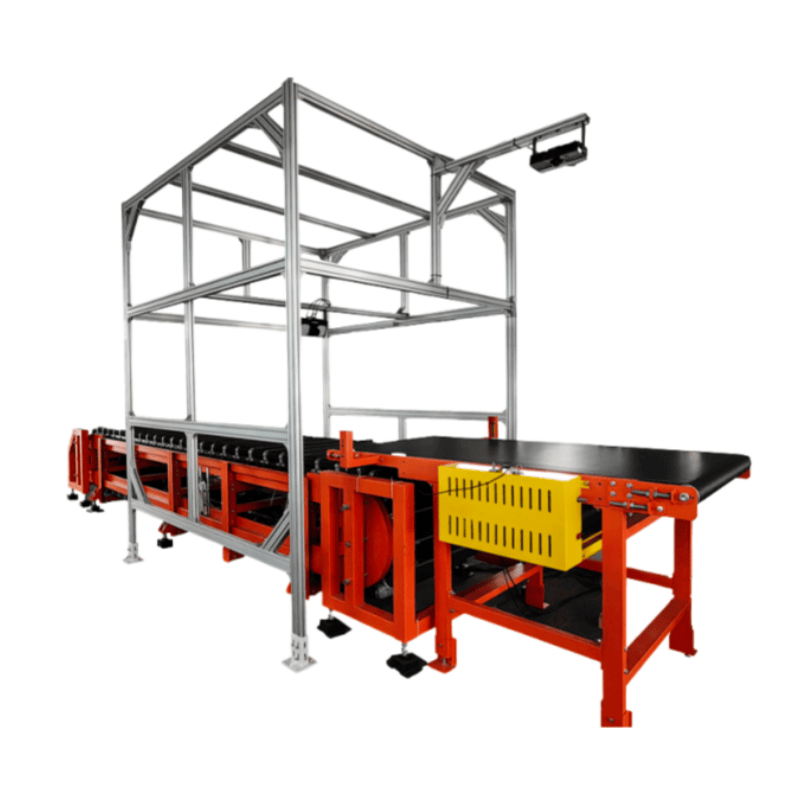
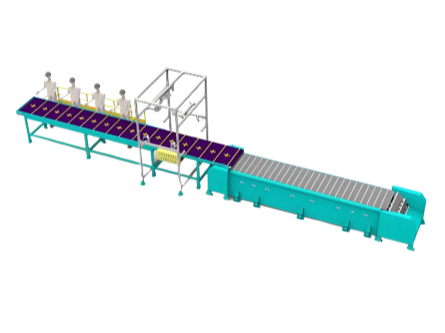
The most useful evaluation is a witnessed run with your own destination histogram, recording contention, recirculation and sustained rate. Against those figures, 10,000-15,000 parcels per hour and a 30-200 chute range become a plan rather than a specification line.
Related reading: our linear narrow-belt sorter overview covers the platform and its 2026 applications.
For a layout review, a sample-run slot or a factory-direct quotation, contact WINDA at info [at] zowinda [dot] com - Zowinda Technology Co., Ltd. will map chute count to your parcel mix and destination set within one business day.
Sorter
Wechat QR code
wechat number:Copyright © 2022-2023 Winda, inc. All rights reserved